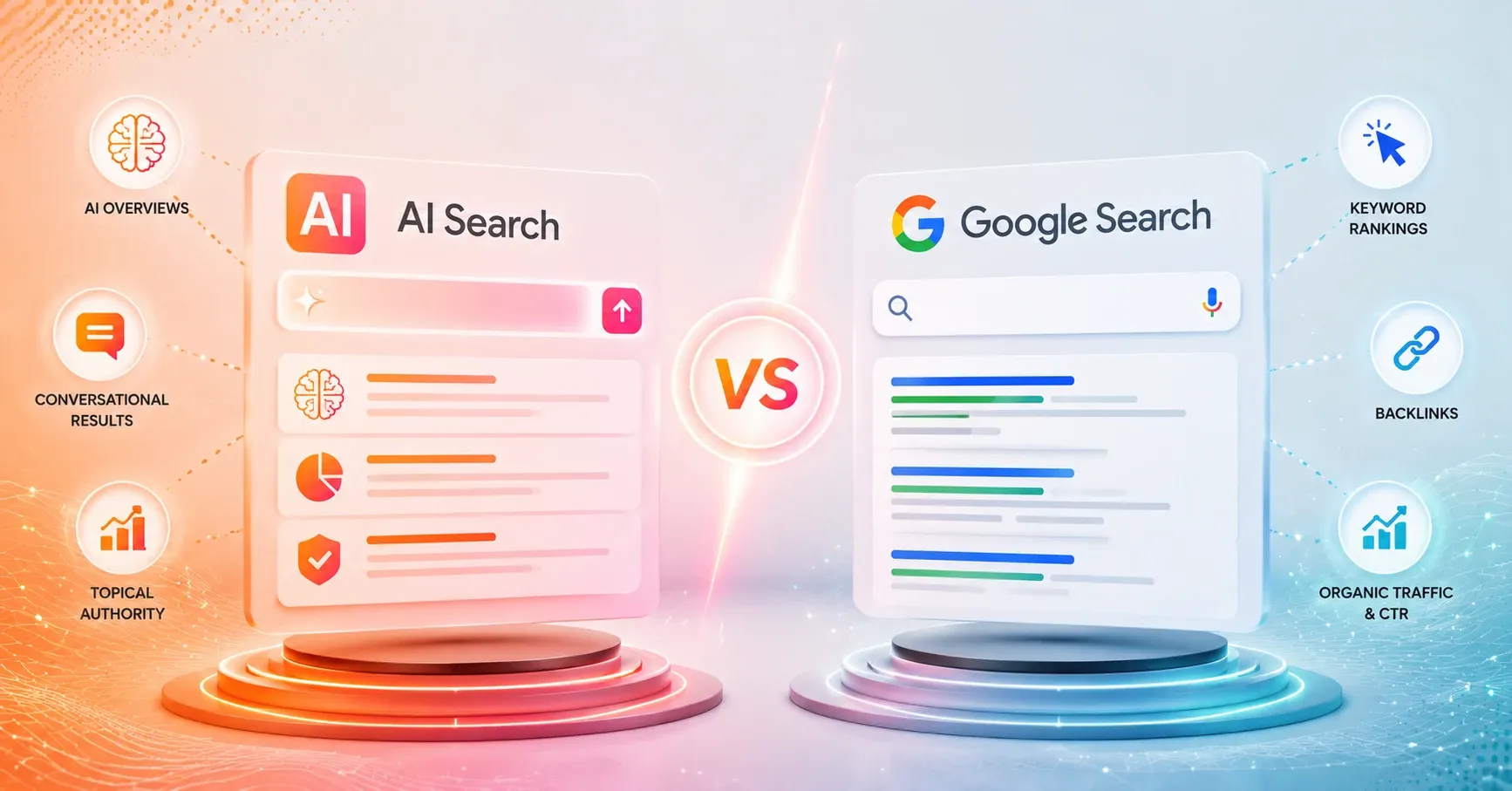
The way people search has changed. They ask complete questions, use voice assistants, compare AI-generated answers, and expect fast, useful responses without opening several pages.
That is why FAQs for AI search are now important for brands that want better visibility across Google, voice search, AI summaries, and answer engines.
A strong FAQ section is no longer just a list of basic questions at the bottom of a page. When written properly, FAQs support FAQ SEO, voice search optimization, answer engine optimization, question based SEO, and conversational SEO. They help search systems understand what your page answers, who it helps, and when your brand should appear as a useful source.
For brands investing in SEO and AI visibility, structured FAQ content is not optional anymore. It helps users get answers faster and helps AI-driven search systems understand your content more clearly.
Table of Contents
What Are FAQs for AI Search?
FAQs for AI search are question-and-answer sections written around how real people search, speak, and ask follow-up questions online.
Traditional FAQs usually answer basic customer questions. Modern FAQ content goes deeper. It answers search intent, supports long-tail queries, improves page context, and gives search engines clearer information to process.
For example, instead of writing:
Do you offer SEO services?
A stronger AI-search-friendly question would be:
How can SEO help my business appear in Google AI answers and voice search results?
The second question is more specific. It reflects real user intent and gives the brand a better opportunity to explain its value while supporting answer engine SEO, voice search SEO, and AI search visibility.
Why Do FAQs Matter for Voice Search Optimization?
Voice search is built around natural questions. People do not usually speak in short keyword phrases.
They ask full questions such as:
- “How do FAQs help with AI search?”
- “What is the best way to optimize my website for voice search?”
- “Which digital marketing agency near me can improve my Google rankings?”
FAQs help because they match the way people naturally speak. A well-written FAQ section gives search engines and voice assistants clear, conversational answers that can match spoken queries.
Good voice search optimization depends on four things:
| Voice Search Need | How FAQs Help |
| Natural Language | FAQs use full questions and conversational answers that match how people speak in voice searches. |
| Clear Answers | They answer user intent quickly, making it easier for search engines to surface relevant responses. |
| Long-Tail Queries | They include specific questions users actually ask, helping capture long-tail search traffic. |
| Local Relevance | They support "near me" and location-based searches, improving visibility for local intent queries. |
For local businesses, this is especially useful. A question like “How can a small business in Dallas improve voice search SEO?” is stronger than a generic line saying, “We offer SEO services.”
How Do FAQs Help AI Answers Understand Your Content?
AI-powered search systems look for clear, useful, and well-structured information. They do not only match keywords. They interpret meaning, compare sources, and summarize answers from content they can understand.
That is where structured FAQ content helps.
FAQs make it easier for AI systems to identify:
- The exact question being answered
- The short answer to that question
- The topic category of the page
- Related follow-up questions
- The brand’s expertise on the subject
- Internal pages that support deeper research
This supports answer engine optimization because answer engines are designed to deliver direct answers, not just links. If your content is organized around real questions and clear answers, it becomes easier for AI search tools to understand and use.
FAQs, Voice Search, AI Answers, and People Also Ask: What Is the Difference?
| Search Format | How Users Search | Best Content Format | Why FAQs Help |
| Voice Search | Users speak full questions | Short, conversational answers | FAQs match spoken search behavior and natural language queries. |
| Google Search | Users type keywords or questions | Helpful sections with clear headings | FAQs improve topical relevance and help answer common search intents. |
| People Also Ask | Users explore related questions | Direct Q&A sections | FAQs answer real follow-up searches and increase visibility in PAA results. |
| AI Answers | Users expect summarized responses | Structured, answer-focused content | FAQs make information easier for AI systems and search engines to extract and summarize. |
This is why FAQs work well across different search experiences. They are simple for users, easy for search engines to process, and useful for AI systems that need clear answer patterns.
Does FAQ Schema Still Matter After Google’s FAQ Rich Result Changes?
Many brands still think FAQ SEO means adding FAQ schema and waiting for rich results to appear in Google. That approach is outdated.
Google originally reduced FAQ rich results in 2023, showing them mainly for well-known government and health websites. Google’s current documentation now says FAQ rich results are no longer appearing in Google Search.
That does not mean FAQs are useless. It means brands should not create FAQs only for rich-result dropdowns.
Modern faq seo is about:
- Answering real user questions clearly
- Supporting long-tail and conversational search
- Improving topical depth
- Helping AI systems understand page context
- Creating internal linking opportunities
- Making pages more useful for readers
FAQ schema may still help organize structured information, but it should not be treated as a shortcut to visibility. The content itself matters more than the markup.
How People Also Ask SEO Can Improve Your FAQ Strategy
Google’s People Also Ask results can help brands understand what users want to know before, during, and after a search.
That is why people also ask SEO is useful for building FAQ sections. It helps you move beyond generic questions and focus on real search behavior.
For example, if the topic is voice search optimization, People Also Ask research may reveal questions like:
- How do I optimize my website for voice search?
- Is voice search still important for SEO?
- What keywords work best for voice search?
- How do featured snippets affect voice search?
- Do FAQs help with voice search SEO?
These questions can become H2s, H3s, FAQ entries, or short answer blocks inside a larger guide.
The goal is not to copy every People Also Ask question. The goal is to understand user intent and build better answers around it.
What Makes FAQ Content AI-Friendly?
AI-friendly FAQ content is clear, specific, and easy to process. It answers the question quickly, then adds useful context.
A strong FAQ answer usually follows this format:
Question: How do FAQs help with AI search?
Answer: FAQs help AI search by organizing content into clear questions and direct answers. This makes it easier for search engines, AI Overviews, and answer engines to understand what the page covers and when it should be used as a helpful resource.
That answer works because it is direct. It gives the answer in the first sentence and adds context without overexplaining.
For better conversational SEO, FAQ answers should sound natural. Avoid stiff, robotic writing.
Instead of:
“FAQ implementation facilitates enhanced semantic alignment across algorithmic response systems.”
Write:
“FAQs help search systems understand your content because they match the way people naturally ask questions.”
Simple answers usually perform better than overcomplicated ones.
Best Practices for Writing FAQs for AI Search
1. Use Real User Questions as Headings
Write FAQ questions the way users actually ask them. Do not reduce every question into a short keyword phrase.
Weak question:
FAQs AI answers
Better question:
How do FAQs help brands appear in AI answers?
Full questions support question based SEO, voice search, and answer engine SEO more effectively.
2. Answer the Question Immediately
The first sentence should give the direct answer. After that, add context, examples, or next steps.
This structure helps users, search engines, and AI systems understand the answer faster.
3. Keep Answers Short, But Useful
For voice search and AI answers, many FAQ answers work best when the first answer is around 35 to 60 words.
You can add more detail below if the topic needs it. Avoid answers that are too thin or too long.
4. Add Internal Links Naturally
FAQs are useful places to guide readers to related pages.
For example:
- A question about SEO strategy can link to an SEO services page.
- A question about AI visibility can link to an AI SEO blog.
- A question about local rankings can link to a local SEO page.
This improves user experience and helps search engines understand how your pages are connected.
5. Use FAQs Across the Page, Not Only at the Bottom
Not every FAQ needs to sit in a final FAQ section. Some questions work better as full sections inside the blog.
A strong content structure can include:
- H2 sections based on important questions
- Short answer blocks under major headings
- Comparison tables for quick scanning
- Step-by-step answers for process-based topics
- A final FAQ section for remaining questions
This creates a stronger seo writing format for both users and AI systems.
Avoid Generic FAQ Questions That Do Not Match Search Intent
Generic FAQs do not add much value if every competitor is answering the same thing in the same way.
Avoid weak questions like:
- What is SEO?
- Why is SEO important?
- How can we help?
Instead, use specific questions that match real search intent, such as:
- How can FAQs help a service business appear in AI answers?
- What makes structured FAQ content useful for voice search optimization?
- Can FAQs improve answer engine optimization for local businesses?
- How should a brand start using FAQs for voice search SEO?
Specific questions give your content a better chance to stand out because they address real buyer concerns.
Common FAQ SEO Mistakes to Avoid
| Mistake | Why It Hurts |
| Writing Vague Questions | Search engines, voice assistants, and AI systems may struggle to understand and match the user's exact intent. |
| Giving Long-Winded Answers | Voice search and AI-generated results often prefer concise answers that can be quickly extracted and presented. |
| Stuffing Keywords | Excessive keyword usage makes content sound unnatural, reduces readability, and can weaken trust with users and search engines. |
| Ignoring People Also Ask Questions | You miss opportunities to answer real user queries that frequently appear in search results. |
| Relying Only on FAQ Schema | FAQ rich results are no longer consistently displayed by Google, so schema alone is not a reliable visibility strategy. |
| Copying the Same FAQs Everywhere | Duplicate answers reduce content uniqueness and can weaken page relevance for specific search intents. |
| Skipping Internal Links | Users miss clear pathways to related content, product pages, or conversion-focused resources, reducing engagement and SEO value. |
Good FAQ SEO is not about adding more questions. It is about adding better questions with clearer answers.
How FAQs Can Support Google Rankings Today
The phrase Google FAQs ranking can be confusing because FAQ rich results have changed. However, FAQs can still support SEO when they make a page more helpful, complete, and easier to understand.
FAQs help by answering long-tail questions that may not fit naturally into the main content. They also improve topical coverage and help users complete their search journey without leaving the page.
For example, a digital marketing agency could include questions like:
- What does a digital marketing agency do for clients?
- How long does SEO take to show results?
- Can SEO help with AI search visibility?
- How does voice search optimization work for local businesses?
- What makes FAQs useful for answer engine optimization?
These questions match real decision-stage searches and help users get clear answers before contacting the business.
How to Build an FAQ Strategy for AI and Voice Search
A strong FAQ strategy should be planned before writing begins. It should not be added at the end just to fill space.
Step 1: Understand the Main Search Intent
Start by identifying what the user wants to learn, compare, solve, or buy.
For this topic, the core intent is clear:
Users want to know how FAQs help with AI search, voice search, and answer engine visibility.
Step 2: Collect Real User Questions
Use reliable sources to find the questions people already ask:
- Google People Also Ask
- Google Search Console
- Sales calls and customer support chats
- Reddit and Quora
- Competitor content
- Ahrefs or Semrush question filters
- Google Business Profile questions
This prevents your FAQ section from sounding generic or made up.
Step 3: Group Questions by Intent
Organize questions into useful categories, such as:
- Basic understanding
- Benefits
- Process
- Local SEO
- AI search
- Voice search
- Cost
- Mistakes
- Next steps
This makes the content easier to scan and easier for search systems to understand.
Step 4: Write Direct, Helpful Answers
Each answer should start with a clear response. Then, add context only where needed.
A good FAQ answer should feel complete without becoming too long.
Step 5: Keep FAQs Updated
Search behavior changes over time. Review FAQ sections regularly and update them with better questions, stronger examples, and relevant internal links.
This is especially important for AI search, where content clarity and freshness both matter.
Final Thoughts
Search is becoming more conversational. Users ask longer questions, voice assistants provide quick responses, and AI search tools summarize information before users click.
That is why FAQs for AI search matter.
A strong FAQ strategy supports FAQ SEO, voice search optimization, answer engine optimization, people also ask SEO, and conversational SEO in one practical format. It helps brands answer real questions, build trust, and improve visibility across modern search experiences.
Varun Digital Media provides an opportunity to move beyond traditional search engine optimization. By building structured FAQs around real buyer questions, brands can make their content more useful for people and easier for search systems to understand.
Ready to Improve Your Visibility in AI Search and Voice Results?
Create FAQ content that answers real customer questions, strengthens SEO, and helps your business appear in AI-powered search experiences.
FAQs
1. How do FAQs help with AI search?
FAQs help AI search by organizing content into clear questions and answers. This makes it easier for search engines, AI tools, and answer engines to understand what your page covers and when it should be used as a helpful source.
2. Are FAQs still useful for Google SEO?
Yes. FAQs are still useful for Google SEO because they improve clarity, answer specific search intent, support long-tail keywords, and strengthen topical relevance. They should not be created only for FAQ rich results.
3. What is the difference between FAQ SEO and answer engine optimization?
FAQ SEO focuses on improving visibility for question-based searches. Answer engine optimization focuses on making content easier for AI tools, voice assistants, and search engines to summarize or use as a direct answer.
4. How long should FAQ answers be for voice search optimization?
FAQ answers for voice search optimization should usually be short, direct, and conversational. A strong answer often starts with 35 to 60 words, followed by extra detail only if needed.
5. Does FAQ schema still matter?
FAQ schema may still help organize structured information, but it should not be treated as a guaranteed ranking or rich-result strategy. Google’s current guidance says FAQ rich results are no longer appearing in Search.
6. Should every blog post include FAQs?
Not every blog needs FAQs. They are most useful for educational, service-based, comparison, local SEO, and decision-stage content where users are likely to have follow-up questions.
7. How can Varun Digital Media help brands create FAQs for AI search?
Varun Digital Media helps brands build FAQ content around real customer questions, People Also Ask insights, voice search queries, and decision-stage search intent. The goal is to make website content easier for users, search engines, and AI answer systems to understand.
8. Can Varun Digital Media optimize existing blogs for voice search and AI answers?
Yes. Varun Digital Media can review existing blogs, identify missing question-based sections, improve FAQ SEO, add structured FAQ content, strengthen internal links, and rewrite answers in a clear format that supports voice search optimization and answer engine optimization.
Published: June 24th, 2026