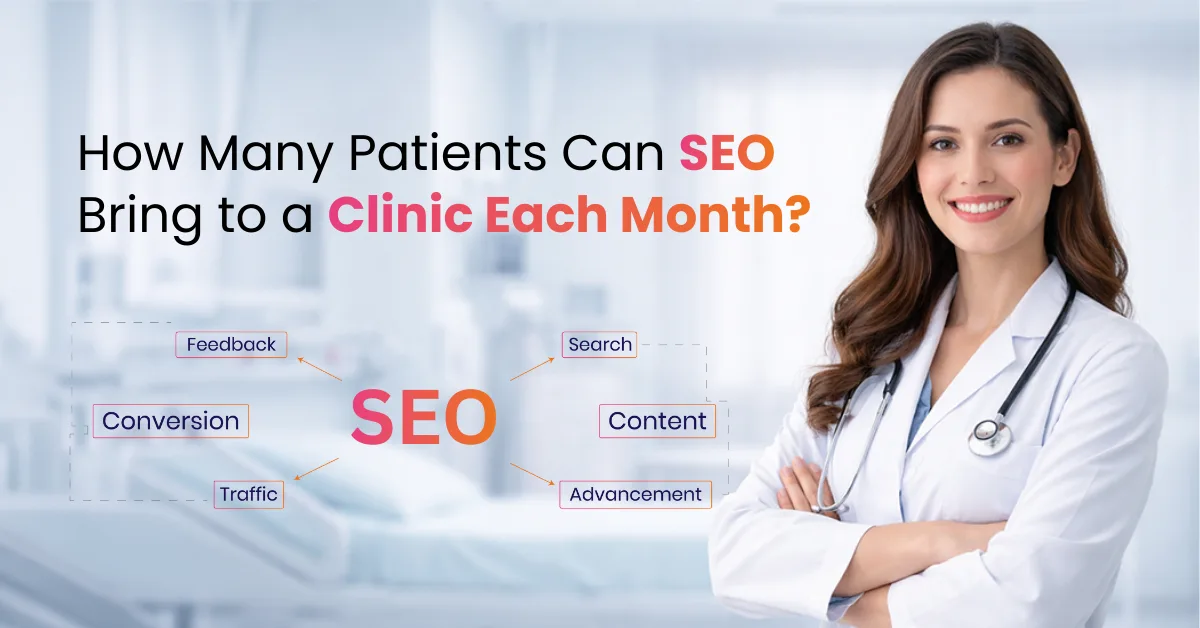
A clinic can get 20 to 300 new patients per month from SEO, depending on local search demand, competition, keyword intent, and website conversion rate. Clinics that invest in local SEO, conversion-optimized service pages, and strong patient review management consistently attract more patients from organic search results.
Table of Contents
Introduction: Why This Question Matters More Than Ever
“How many patients can a clinic get from SEO?” is no longer just a marketing question.
It is a growth, sustainability, and survival question for healthcare providers.
Across the United States, healthcare clinics are competing for visibility at the exact moment patients search for care. Urgent care clinics, walk-in clinics, pediatric practices, physical therapy centers, and private medical clinics are all fighting for the same local search demand.
The clinics that appear at the top of Google capture appointments.
The clinics that don’t remain invisible—regardless of service quality.
At Varun Digital Media, we work with healthcare organizations that want predictable patient acquisition, not vanity traffic, inflated keyword rankings, or reports that don’t translate into appointments.
SEO can absolutely drive new patients—but only when it aligns with how patients actually search, evaluate providers, and take action.
This guide explains:
- Realistic patient acquisition numbers
- Why do some clinics win while others lose
- How SEO converts visibility into real patient care
SEO Can Drive 20–300+ Patients Monthly
SEO results vary, but patterns remain consistent across healthcare practices.
Realistic Monthly Patient Acquisition from SEO
- Small clinics: 20–50 new patients monthly
- Established clinics: 60–150 new patients monthly
- Local leaders: 200–300+ patients monthly
These patients come from organic search results, not paid advertising.
SEO works because patients search with medical intent, not curiosity.
Why Patient Numbers Vary So Widely Between Clinics
SEO is not a fixed formula.
Two clinics may invest similarly and still see different results due to local and operational factors.
Core Factors Affecting Patient Volume
- Local search demand differs by area
- Competition varies by geography
- Website conversion quality differs
- Review management impacts trust
SEO success is context-driven, not budget-driven.
How Patients Actually Search for Medical Care
Patients do not casually browse medical websites.
They search when care becomes necessary.
Common Patient Search Behaviors
- Patients search online during symptom escalation
- Patients search nearby clinics using local keywords
- Patients compare patient reviews before choosing providers
According to Google research, many patients conduct healthcare searches with urgency, looking for fast answers, nearby options, and reputable providers. Understanding how people search for healthcare online helps clinics tailor their local SEO strategy and prioritize visibility when it matters most.
SEO Patient Acquisition Math (Why This Page Competes for #1)
SEO does not bring “traffic.”
It brings patients who are already searching for care.
Example: Urgent Care Clinic SEO Funnel
| Metric | Value |
| Monthly Search Volume (Local Searches) | 6,000 |
| Map Pack CTR (30%) | 1,800 |
| Website Visits (40%) | 720 |
| Conversion Rate (8%) | 58 |
| Estimated New Patients | ~58 |
Clinics ranking in Google Maps and local search results capture demand already present in their area.
Why These Numbers Are Realistic
Google ranks local healthcare providers using three core factors:
- Relevance
- Proximity
- Prominence
Prominence includes:
- Patient reviews
- Accurate business listings
- Local citations
- Conversion-optimized service pages
Clinics are strong across all three and attract more patients consistently.
Google explains that local search ranking factors are based on relevance, proximity, and prominence. For healthcare providers, this means accurate business information, strong patient reviews, and locally optimized service pages directly influence visibility and patient acquisition from local search results.
Keyword Intent: The #1 SEO Mistake Clinics Make
Many clinics chase traffic volume.
Traffic does not equal patients.
High-Intent Keywords That Drive Patient Inquiries
- “Urgent care near me”
- “Walk-in clinic open now.”
- “Pediatric urgent care nearby”
- “Physical therapy clinic near me”
These keywords signal immediate medical need.
Educational keywords build authority, but service-intent keywords drive patient acquisition.
Why Local SEO Is the Core of Healthcare SEO
Local SEO is not optional.
It is the primary patient acquisition engine for healthcare practices.
How Local SEO Drives New Patients
- Appears in Google Maps
- Ranks in local search results
- Displays clinic details instantly
- Triggers calls and directions
Clinics that dominate local search results win patient trust faster.
Google Business Profile: The Highest ROI SEO Asset
A Google Business Profile often converts patients before the website loads.
It influences:
- Local search visibility
- Click-to-call actions
- Patient reviews credibility
Clinics with optimized profiles receive significantly more patient inquiries than clinics relying only on websites.
Local SEO vs National SEO: What Actually Brings Patients
| Factor | Local SEO | National SEO |
| Patient Intent | High | Low |
| Conversion Rate | Strong | Weak |
| Ranking Speed | Faster | Slower |
| ROI | Higher | Lower |
For clinics, local SEO strategy always wins.
How SEO Traffic Converts into Real Patients
SEO brings visitors.
Conversion turns them into patients.
What Makes Patients Take Action
- Fast page load speed
- Clear medical service pages
- Visible contact details
- Strong patient reviews
- Trust-focused messaging
Without conversion-focused SEO, clinics lose patients despite visibility.
Service Pages: Where Patient Decisions Happen
Service pages outperform blogs for patient acquisition.
Why?
Because they match immediate intent.
High-Converting Service Page Elements
- Clear medical expertise explanation
- Location and availability clarity
- Simple appointment actions
- Mobile-friendly layout
Blogs build authority.
Service pages generate patients.
Why Some Clinics Lose Patients Despite SEO
Many clinics rank but still struggle.
Common Reasons Clinics Lose Patients
- Poor medical website optimization
- Confusing navigation
- Weak call-to-action placement
- No review management system
SEO without usability leads to lost opportunities.
The Role of Reviews in Patient Acquisition
Patient reviews influence both rankings and decisions.
Why Reviews Matter
- Improve local search visibility
- Increase click-through rates
- Build trust instantly
Clinics with strong online reviews consistently outperform competitors.
Technical SEO: The Invisible Growth Driver
Technical SEO ensures search engines understand medical websites.
Critical Technical SEO Elements
- Structured data for healthcare businesses
- Clean site architecture
- Optimized meta descriptions
- Mobile performance improvements
Without technical SEO, strong content cannot rank consistently.
SEO vs Paid Advertising for Clinics
Paid ads generate short-term traffic.
SEO builds long-term patient acquisition.
Why SEO Wins Long-Term
- Lower cost per patient
- Higher patient trust
- Sustainable growth
Unlike paid ads, SEO continues delivering patients without ongoing spending.
How Varun Digital Media Delivers Healthcare SEO Results
At Varun Digital Media, healthcare SEO services focus on real patient acquisition, not traffic inflation.
Our approach includes:
- Local SEO strategy aligned with clinic locations
- Medical website optimization for conversions
- Review and reputation management
- Performance tracking using Google Analytics
SEO should support healthcare delivery—not distract from it.
Final Takeaway
SEO is not guesswork.
It is a system built on intent, trust, visibility, and conversion.
Clinics that invest in structured local SEO, technical SEO, review management, and patient-focused content achieve consistent growth. At Varun Digital Media, we help healthcare organizations turn search visibility into real patient care outcomes.
If your clinic wants predictable patient acquisition instead of traffic spikes, SEO is the foundation.
Struggling to attract consistent patients from Google?
Get a Free Healthcare SEO Growth Plan
Frequently Asked Questions
1. How many patients does SEO bring to a clinic each month?
SEO typically brings between 20 and 300 new patients monthly, depending on local demand, competition, keyword intent, and website conversion quality. Clinics with strong local SEO, optimized service pages, and active review management consistently achieve higher patient acquisition from organic search results.
2. How long does it take for SEO to start bringing new patients?
Most clinics see early SEO improvements within three months. Consistent patient acquisition usually begins between four and six months as search visibility, local rankings, and trust signals strengthen. Unlike paid advertising, SEO compounds over time and delivers sustainable patient growth.
3. Is local SEO more effective than national SEO for clinics?
Yes. Local SEO targets patients actively searching for nearby medical care. Google Maps, local listings, and location-based keywords convert far better than national traffic, which often attracts informational visitors instead of appointment-ready patients seeking immediate medical services.
Why do clinics rank on Google but still lose patients?
Clinics may rank but still lose patients due to slow websites, unclear service pages, poor mobile experience, weak calls to action, or limited patient reviews. Ranking alone does not guarantee conversions without strong website usability, trust signals, and conversion-focused optimization.
5. Are blog posts enough to get patients from SEO?
No. Blog posts support authority and education, but clinics need optimized service pages, strong local listings, technical SEO, and conversion-focused design to turn search traffic into booked appointments and long-term patient growth.
Published: February 9th, 2026