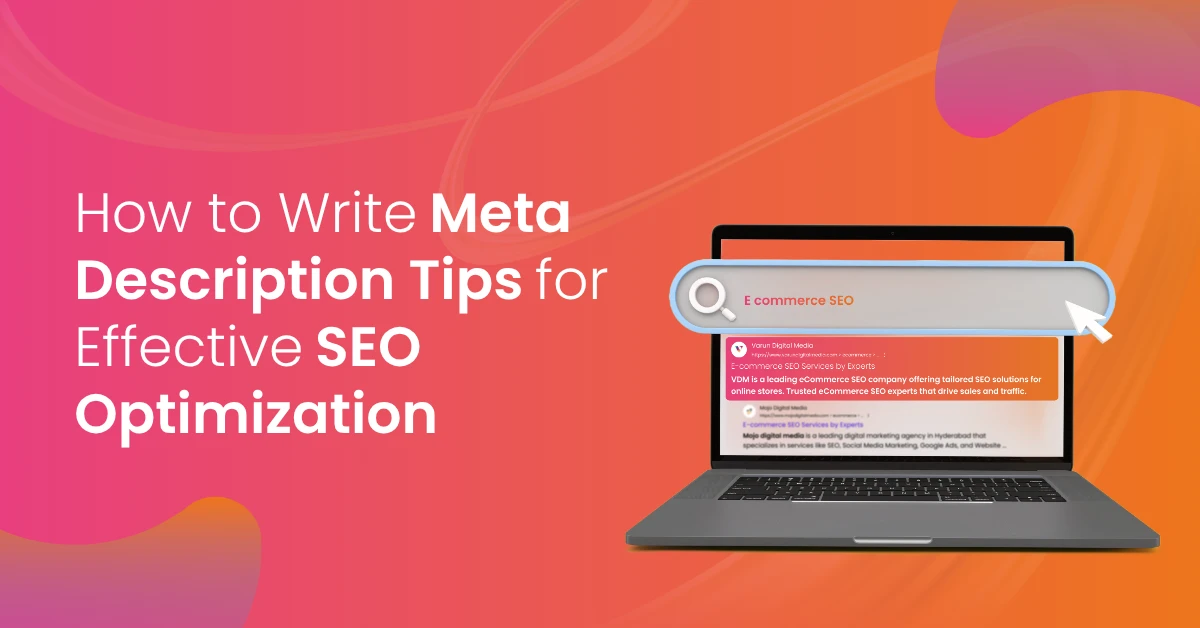
A strong meta description can improve how your page shows up in search, shape first impressions, and raise the chances of earning a click from the right visitor. It does not directly push rankings on its own, but it still matters because search results are competitive. When two pages look similar on the results page, the one with a clearer, more convincing snippet often wins the click.
That is why learning how to write meta descriptions still matters. A weak snippet can make a good page look average. A sharp one can make the page feel relevant, useful, and worth opening. For businesses investing in SEO, this is one of the simplest places to improve search presentation without touching the full body copy.
At Varun Digital Media, snippet writing is treated as part of search communication. A page should not only rank. It should also give searchers a strong reason to choose it.
Table of Contents
What Is the Meta Description in SEO Terms?
A meta description is the short summary that may appear under your page title in search results. If you are asking what a meta description is, that is the simplest answer. It is a snippet-level description added to the page’s HTML to help describe what the page covers.
If you are asking what the meta description is in practical SEO terms, think of it as the short, persuasive summary of a page that searchers may see before clicking.
A good seo description does three things quickly:
- tells the user what the page is about
- shows why the page fits the search
- encourages the user to click
That is the real job of the page meta description. It is not filler text. It is pre-click copy.
Why Are Meta Descriptions Important?
Search engines do not always use the exact text you write. They may generate their own snippet from the page when it seems more relevant to the search. Even so, custom descriptions still matter because they give you more control over how your pages are introduced.
A strong meta description can help with:
- A higher click-through rate
- Clearer alignment with user intent
- Stronger message control in search
- Better differentiation from nearby results
- Cleaner presentation for service pages, blogs, and homepages
That is why meta descriptions for SEO still deserve attention. They are not a direct ranking lever, but they affect whether your ranking turns into traffic.
Turn Weak Search Snippets Into Click-Worthy Copy
Make your search results clearer, more persuasive, and better aligned with user intent through stronger meta description writing.
Optimize Your Website Meta Details
How to Write Meta Descriptions That Work
Knowing how to write meta descriptions well means balancing clarity, search relevance, and persuasion. The best ones are short, useful, and tied tightly to the page’s intent.
Keep Meta Description Length Under Control
The ideal meta description length is usually around 140 to 155 characters for many pages. That range helps reduce the risk of awkward cutoffs across devices, though exact display still varies by screen width, query bolding, and character shape.
A clean length meta description matters because a clipped snippet can weaken the message. If the value sits too late in the line, it may disappear before the user sees it.
If needed, use a meta description length checker to preview the display risk before publishing.
Meta Description Length Guidelines:
For practical publishing, use this working rule:
- Homepage and service pages: 140 to 155 characters
- Blog pages: 135 to 155 characters
- Product and category pages: 120 to 150 characters if key details need to appear early
The safest move is to place the main value and keyword in the first half of the line.
Note: Recommended meta description length is usually around 140 to 155 characters, but there is no fixed Google character limit. Google truncates snippets based on device width, query context, and formatting, so important information should appear early in the description.
Use the Primary Keyword Naturally
A page’s main keyword should appear in the description or be reflected closely enough that the snippet feels directly relevant. This helps users connect the search with the result more quickly.
For this article, the natural phrase is the meta description. For another page, it may be something else entirely. The key is to make the language feel normal.
Good snippet writing uses keywords with purpose. It does not force repeated phrasing just to look optimized.
Match Search Intent Before You Try to Sound Clever
A lot of underperforming snippets summarize the topic but fail to match what the user wants from that topic.
That is the real difference between average and effective snippet writing.
- If the keyword suggests a how-to query, the description should suggest a clear process
- If the page is commercial, the description should suggest service value or product relevance
- If the page is comparative, the description should hint at comparison or selection help
- If the page answers a question, the snippet should suggest clarity or a direct answer
This is what separates generic lines from stronger seo description examples.
Reflect the Page Honestly
Your snippet should describe the page you actually have. If it promises a guide and the page is just a thin overview, the user will notice fast.
That is why accuracy matters as much as persuasion. A misleading website meta description may earn a click once, but it weakens trust and increases the chance of a quick exit.
Good snippet writing sets the right expectation.
Add a Clear Prompt to Click
A good call to action can help, especially on service pages, landing pages, and commercial blog content. This does not need to sound loud or sales-heavy. It can be simple:
- Learn how
- See examples
- Explore options
- Compare tools
- Get practical tips
- Find the right fit
Used carefully, this turns an ordinary meta desc into a more action-oriented one.
Write Unique Meta Descriptions for Each Important Page
One repeated issue across weak sites is duplication. The same summary gets reused on service pages, category pages, and article templates with almost no change.
That hurts clarity in search. Each page should carry its own angle, because each page solves a different need.
This is one of the most basic meta description best practices, though many sites still miss it.
Use Natural, Human Language
A lot of metadata sounds system-generated. Searchers can feel that instantly. It reads flat, generic, and oddly stiff.
The strongest good meta description examples sound like short human-written summaries. They are direct, readable, and easy to trust.
That matters more than fancy wording.
What Makes a Meta Description Good or Weak
The fastest way to improve snippet writing is to compare strong and weak structures.
Weak Example
Learn about SEO, digital growth, online visibility, rankings, and traffic with our guide to search optimization.
Why it underperforms:
- too broad
- unclear page angle
- no direct user benefit
- could fit dozens of pages
Better Example
Learn how to improve search visibility with clear SEO steps, stronger page targeting, and practical fixes that support higher-quality traffic.
Why it works better:
- clearer value
- stronger intent match
- more specific promise
- easier to trust
That is how the best meta description examples should be studied. Not as templates to copy, but as structure patterns to understand.
Meta Description Example Types You Should Know
Different pages need different snippet angles. A homepage, service page, blog article, and product page should not sound the same.
Homepage Meta Description
A homepage meta description should explain what the business does, who it helps, and why the user should care.
Homepage Meta Description Example:
Varun Digital Media helps businesses grow through SEO, paid campaigns, content strategy, and website improvements that support stronger search visibility.
This is one of the more useful forms of homepage meta description examples because it is broad enough for a homepage, though still specific enough to say something real.
Blog Meta Description
A blog meta description should summarize the topic and suggest the benefit of reading.
Blog Meta Description Example:
Learn how to write meta descriptions that match search intent, improve click-through rate, and strengthen page-level SEO.
Service Page Meta Description
A service page should sound more commercial and outcome-focused.
Service Page Example:
Get search-focused SEO support, sharper on-page messaging, and cleaner page optimization that helps the right visitors convert.
Product or Category Snippet
A product or category page often needs to show selection value, features, or commercial relevance quickly.
That is where seo optimization meta description work becomes highly practical, especially on ecommerce sites.
Tips for Social Media Meta Descriptions
Search is not the only place where snippet-like text matters. Shared links often pull metadata or related preview text into social posts, messaging apps, and collaboration platforms.
That means the line under your page title should still make sense outside of search. A social-friendly description should be:
- clear
- short
- on-brand
- interesting enough to stop the scroll
- accurate to the page
Why This Matters Beyond Search
A good description helps with:
- sharper link previews
- stronger click appeal on shared posts
- better consistency between SEO and social messaging
- more polished homepage and blog sharing
This matters for articles, guides, service pages, and especially the homepage, where many brands first push their main URL through social channels.
Get Sharper Metadata That Wins More Clicks
Let Varun Digital Media help you strengthen meta titles, descriptions, and on-page SEO messaging for better search presentation.
What to Do If Google Rewrites Your Meta Descriptions
Search engines may rewrite snippets when they believe another piece of page text is a better match for the query.
This can happen when:
- The written description is too generic
- The snippet does not match the query closely enough
- The page covers several subtopics
- The written text feels weak or repetitive
- The page content includes a better answer
A rewrite does not automatically mean failure. The real issue is whether the result still presents the page clearly and drives the right click.
How to Reduce the Risk of Rewriting the Meta Descriptions
You can lower the chance of rewrites by:
- matching the page topic closely
- using the primary keyword naturally
- avoiding broad language that could fit any page
- keeping the description concise
- making the snippet reflect visible content accurately
That is one reason the meta description tag should be written with the page copy in mind, not in isolation.
Tools to Help You Create Effective Meta Descriptions
Tools can help with scale, audits, previews, and bulk clean-up, especially on larger websites.
Useful tool types include:
- SEO plugins for page-level editing
- site crawlers for duplicate or missing descriptions
- preview tools for length checks
- auditing tools for weak metadata coverage
- reporting tools for pages with impressions but a weak click-through rate
These are the places where tags and meta tags become practical SEO work, not just technical terms.
How to Add Meta Description in WordPress
If your site runs on WordPress and you are asking how to add a meta description in WordPress, the path is usually simple.
- Open the page or post editor
- Find the SEO settings area created by your plugin
- Enter the custom description into the snippet field
- Preview the result if the plugin offers that view
- Save or update the page
That is the usual workflow for how to add a meta description in WordPress across most modern WordPress builds.
Using AI to Draft Meta Descriptions
AI can help with first drafts, especially when a site has many pages and limited editorial time. Still, the output should always be reviewed before publishing.
Check AI-generated snippets for:
- accuracy
- readability
- character length
- duplicated language
- search intent fit
- tone consistency
AI can help you move faster. It should not replace judgment.
Common Meta Description Mistakes to Avoid
Several problems show up again and again across weak metadata setups.
Duplicate Descriptions
The same line appears across multiple pages, making the site look thin or repetitive in search.
Empty Description Fields
No custom description exists, so the search engine pulls random page text.
Keyword Stuffing
The snippet reads unnaturally because it tries too hard to force several phrases in.
Mismatch Between Snippet and Page
The description promises one thing, but the page delivers something else.
Length Problems
The message gets cut before the value appears, or the text is so short that it says almost nothing.
Generic Language
The description is technically correct, but too broad to stand out.
Fixing these issues often improves search presentation faster than teams expect.
How Varun Digital Media Approaches Meta Description Strategy
At Varun Digital Media, snippet writing is tied to the wider role of the page. A page title, internal context, user intent, and likely search behavior all shape the final line.
This usually includes:
- rewriting weak metadata on high-impression pages
- improving blog meta description quality
- cleaning duplicate service-page descriptions
- aligning meta title and snippet language
- reviewing homepage messaging in search
- strengthening metadata on commercial pages first
This matters because better rankings alone do not guarantee stronger traffic if the search result itself is not convincing enough to win the click.
Conclusion
A good meta description does not need to be complicated. It needs to be relevant, clear, concise, and tied closely to what the page actually offers.
That is the real lesson in learning how to write meta descriptions. You are writing one of the shortest, most visible pieces of search copy connected to the page. When that line is vague or poorly written, it weakens the result before the visit even begins. When it is focused and useful, it supports stronger clicks and better first impressions.
For businesses serious about organic growth, metadata should not be treated as an afterthought. It should be reviewed, improved, and aligned with page intent just like the rest of the page.
Improve Search Snippets Before You Lose Valuable Clicks
Get sharper metadata, stronger search messaging, and cleaner on-page SEO with Varun Digital Media.
Frequently Asked Questions
1. What is a meta description?
A meta description is a short summary placed in a page’s HTML that may appear under the page title in search results.
2. What is an SEO description?
If someone asks what is an seo description is, they are usually referring to the short snippet written for search results, which is often the page’s meta description.
3. What is a good meta description length?
A practical meta description length is usually around 140 to 155 characters for many pages, though display varies by device and query.
4. Do meta descriptions improve rankings directly?
Not directly. Still, meta descriptions for SEO can improve click appeal, which helps search performance from existing rankings.
5. What should a homepage meta description include?
A strong homepage meta description should explain what the business does, who it helps, and why the visitor should click.
6. Should every page have a different meta description?
Yes. Each important website meta description should be unique, so searchers and search engines can better understand the page.
7. How do I write a blog meta description?
A blog meta description should summarize the topic, match search intent, and give readers a clear reason to visit the page.
8. How do I add a meta description in WordPress?
Most WordPress websites allow this through an SEO plugin field inside the editor for each page or post.
9. Why does Google rewrite my snippet sometimes?
Search engines may rewrite it when they think a different line from the page better fits the search query.
10. Are meta descriptions still worth writing if Google rewrites them?
Yes. They still help with message control, search presentation, and click-through rate when they are shown as intended.
Published: May 11th, 2026