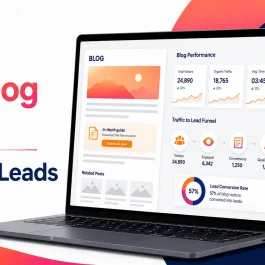
Growing blog traffic is valuable, but pageviews alone do not create revenue. A business may attract thousands of readers without receiving meaningful inquiries if its articles do not guide visitors toward a relevant next step.
Turning blog traffic to leads requires more than adding a contact button at the bottom of every post. The article must attract the right search intent, answer an important question, establish trust, and connect the reader with an offer that matches the problem being researched.
A successful blog conversion strategy creates a natural path from search result to article, from article to resource, and from resource to sales conversation. This guide explains how to build that path without making useful content feel like a sales pitch.
Table of Contents
Why Does Blog Traffic Fail to Generate Leads?
Blog visitors do not automatically become potential customers. Many readers arrive with informational intent. They may be researching a problem, comparing approaches, learning unfamiliar terminology, or preparing for a future purchase.
Traffic often fails to convert when:
- The article attracts an audience outside the company’s target market.
- The topic has little connection to a product or service.
- The page contains no relevant content CTA.
- The CTA asks for too much commitment too early.
- Internal links do not lead toward commercial pages.
- The form requests unnecessary information.
- The page provides no reason to trust the business.
- Leads receive no follow-up after submitting information.
- The company measures traffic but not lead quality.
The goal is not to convert every reader immediately. It is to help the right readers progress toward the next appropriate stage.
A structured content marketing strategy connects search visibility, audience needs, conversion opportunities, and follow-up rather than treating blog publishing as an isolated activity.
What Is a Qualified Blog Lead?
A qualified blog lead is a reader who matches the company’s intended customer profile and has demonstrated meaningful interest in solving a relevant problem.
A lead may be considered qualified when the person:
- Works within a target industry or company type
- Holds an appropriate role or influences the purchase
- Has a problem the company can solve
- Engages with commercially relevant content
- Downloads a related resource
- Visits product, service, pricing, or case-study pages
- Registers for a webinar or consultation
- Responds to a follow-up message
- Shows an appropriate budget or implementation timeline
An email address alone does not make a lead qualified. Qualification depends on fit, intent, engagement, and readiness.
1. Attract Search Traffic With Commercial Relevance
The first step in lead generation from SEO is selecting blog topics connected to the problems customers experience before purchasing.
A broad article may generate traffic but attract few potential buyers. A narrower article built around a real business problem may receive less traffic while producing more qualified inquiries.
For example:
| Broad Topic | More Commercially Relevant Topic |
| Marketing Tips | How to Automate Lead Follow-Ups Without Replacing Your CRM |
| Website Design Trends | Website Redesign Checklist for B2B Companies |
| Customer Service Guide | How to Reduce Missed Calls Without Expanding the Support Team |
| SEO Basics | How Long Does B2B SEO Take to Generate Qualified Leads? |
Commercial relevance does not mean every article should promote a service aggressively. It means the reader’s problem should have a logical connection to the company’s expertise.
Professional SEO services can align keyword research with search intent, customer problems, service relevance, and conversion potential rather than prioritizing search volume alone.
2. Match the CTA to the Reader’s Intent
A content CTA should continue the conversation started by the article.
Someone reading an introductory guide may not be ready to request a proposal. A checklist, template, comparison guide, or email course may be a more appropriate next step.
CTA Examples by Search Intent
| Reader Intent | Suitable CTA |
| Learning a new topic | Download a beginner’s guide |
| Diagnosing a problem | Complete a self-assessment |
| Comparing solutions | View a comparison checklist |
| Planning implementation | Download a project template |
| Evaluating providers | Read a case study |
| Reviewing a product | Request a demonstration |
| Preparing to purchase | Speak with a specialist |
Avoid using the same “Contact Us” CTA in every article. The action should match the reader’s level of awareness and the subject being discussed.
Weak CTA
Contact us to learn more.
Stronger CTA
Download the B2B Content Conversion Checklist to identify where your blog is losing qualified leads.
The stronger version explains what the reader receives and why it is relevant.
3. Place CTAs at Meaningful Decision Points
A CTA does not need to appear only at the end of an article.
Different visitors make decisions at different stages. Some readers recognize their problem within the first few sections, while others need more evidence before acting.
Useful CTA locations include:
- Near the introduction: Offer a low-commitment resource related to the topic.
- After a major problem section: Present a checklist, assessment, or guide.
- Beside a relevant example: Link to a service, case study, or demonstration.
- Before the conclusion: Offer the strongest next step for engaged readers.
- At the end: Provide a direct conversion opportunity.
Do not interrupt every section with a promotional box. Too many competing requests can make the page difficult to read and weaken the primary conversion goal.
Each article should usually have one principal offer supported by one or two secondary pathways.
4. Create Lead Magnets Around the Article’s Topic
Lead magnets exchange something useful for a visitor’s contact information.
Common lead magnets include:
- Checklists
- Templates
- Worksheets
- Calculators
- Comparison guides
- Industry reports
- Email courses
- Webinar recordings
- Audit tools
- Implementation plans
- Buying guides
- Case-study collections
HubSpot defines a lead magnet as a useful resource offered in exchange for contact details and recommends connecting the offer with a clear CTA, focused landing page, form, and follow-up sequence.
The most effective lead magnet usually solves the next problem created by the article.
For example:
Blog topic: How to Audit a Website’s Conversion Funnel
Lead magnet: Conversion Funnel Audit Worksheet
Blog topic: CRM Migration Planning
Lead magnet: CRM Migration Readiness Checklist
Blog topic: Payroll Compliance Risks
Lead magnet: Monthly Payroll Compliance Calendar
The offer should extend the article, not simply convert the same information into a PDF.
5. Use Content Upgrades for High-Value Articles
A content upgrade is a lead magnet created specifically for one article or closely related group of articles.
Generic newsletter forms may appeal to only a small portion of readers. A content upgrade feels more useful because it directly supports the task the visitor is already completing.
Useful content upgrades include:
- A printable version of the article’s checklist
- A spreadsheet for calculating costs
- A script based on the article’s recommendations
- A template that applies the process
- A detailed version of a comparison table
- A downloadable implementation timeline
- A scorecard for assessing current performance
Start with articles that already attract relevant traffic. Building a specific resource for a proven page is usually more efficient than creating lead magnets before understanding audience demand.
6. Build Internal Links Around the Conversion Journey
Internal links should help readers move from educational content toward deeper evaluation.
For example, a reader may follow this path:
Informational blog → Detailed guide → Case study → Service page → Consultation form
Google recommends using crawlable internal links with concise, descriptive anchor text. It also advises linking important pages from other contextually relevant pages so users and search engines can understand the site more easily.
Useful Internal Link Destinations
Blog articles should link naturally to:
- Supporting educational articles
- Service pages
- Product or feature pages
- Case studies
- Comparison pages
- Pricing information
- FAQs
- Lead magnets
- Webinars
- Contact or demo pages
Avoid Generic Anchor Text
Instead of:
Click here to learn more.
Use:
Explore our lead generation SEO services.
Descriptive anchor text tells the reader what to expect and gives the destination page clearer context.
Internal links should be useful rather than forced. Google states that there is no universal ideal number of links for a page, so relevance should guide placement.
7. Connect Blog Posts to Focused Landing Pages
Sending readers from a specific article to a generic homepage creates another decision burden.
A focused landing page should continue the message and explain:
- What the visitor will receive
- Who the offer is designed for
- Which problem it addresses
- What information the form requires
- What happens after submission
- Why the company can be trusted
The headline on the landing page should align closely with the CTA that brought the visitor there.
For example:
Article CTA: Download the Website Conversion Audit Checklist
Landing-page headline: Find the Conversion Barriers Costing Your Website Leads
Avoid introducing unrelated offers, multiple navigation choices, or several competing CTAs on the landing page.
8. Keep Lead Forms Proportionate to the Offer
A visitor downloading a short checklist should not need to complete a detailed sales qualification form.
Form length should reflect the value of the offer and the visitor’s stage in the funnel.
Early-Stage Form
A low-commitment form may request:
- First name
- Work email
Mid-Funnel Form
A webinar, assessment, or detailed report may request:
- Name
- Work email
- Company
- Role
- Main challenge
High-Intent Form
A consultation or proposal request may include:
- Contact information
- Company details
- Required service
- Business objective
- Estimated timeline
Ask only for information that will be used. Every unnecessary field increases effort and can reduce completion.
A conversion rate optimization strategy can evaluate form length, placement, messaging, user behavior, and funnel drop-off to improve lead capture.
9. Show Trust Before Requesting Contact Information
Visitors are more likely to share business information when they understand who will receive it and what will happen next.
Relevant trust signals include:
- Client testimonials
- Case-study results
- Specialist credentials
- Recognizable client logos
- Industry experience
- Security or privacy information
- Clear contact details
- Transparent follow-up expectations
- Examples of the downloadable resource
Place trust elements close to the form or CTA they support.
A preview of a checklist, template, report, or worksheet can also help visitors judge whether the resource is worth exchanging their information for.
Avoid unsupported claims such as “best in the industry” or “guaranteed results.” Specific evidence is more credible than broad promotional language.
10. Create a Follow-Up Sequence for Every Lead Magnet
Capturing leads from content is only the beginning. Most readers will not become sales-ready immediately after downloading a resource.
Create a short nurturing sequence that continues the subject.
A practical sequence may include:
- Immediate delivery: Send the requested resource and explain how to use it.
- Supporting guidance: Share an article that helps complete the next step.
- Proof: Provide a relevant example, testimonial, or case study.
- Evaluation support: Answer a common objection or comparison question.
- Conversion opportunity: Invite the reader to a consultation, demo, or assessment.
The sequence should relate directly to the original article and lead magnet. A reader who downloads an SEO checklist should not immediately receive generic promotions for unrelated services.
Email marketing services can connect lead capture with segmented nurturing, behavior-based follow-ups, and conversion-focused campaigns.
11. Qualify Leads Through Behavior and Fit
Not every blog subscriber should be sent directly to sales.
Lead qualification can consider two categories:
Customer Fit
- Industry
- Company size
- Location
- Role
- Use case
- Available budget
- Required timeline
Engagement and Intent
- Articles viewed
- Lead magnets downloaded
- Return visits
- Service pages visited
- Webinar attendance
- Email engagement
- Pricing-page activity
- Demo requests
A reader who views one introductory article may need further education. A visitor who reads several commercial articles, downloads an implementation guide, and visits a service page may deserve faster sales follow-up.
Qualification rules should reflect the company’s actual sales process rather than relying on arbitrary scores.
12. Optimize Existing High-Traffic Blog Posts
Businesses do not always need more articles. Existing posts may already attract relevant traffic but lack conversion opportunities.
Review high-traffic pages for:
- Missing CTAs
- Outdated offers
- Weak internal links
- Generic conclusions
- Broken forms
- Poor mobile placement
- Irrelevant lead magnets
- Low-value anchor text
- Missing trust signals
- No follow-up workflow
Prioritize Posts Using Four Factors
| Factor | Question |
| Traffic | Does the article receive meaningful organic visits? |
| Relevance | Does the topic connect to a current service? |
| Intent | Does the search indicate a real business problem? |
| Conversion Gap | Does the page receive traffic but generate few leads? |
Optimizing proven pages can produce results faster than waiting for new content to rank.
13. Build Topic Clusters That Support Conversion
A single article may not answer every question a buyer has.
Create a topic cluster containing content for different stages:
Awareness Content
- What is the problem?
- Why does it happen?
- What are the risks?
Consideration Content
- Which approaches can solve it?
- What features matter?
- How do available options compare?
Decision Content
- How much does it cost?
- How long does implementation take?
- Which provider should a company choose?
- What results can be expected?
Connect the articles with internal links and direct high-intent readers toward the relevant service page.
Google recommends creating a logical site structure and linking important pages from related content using concise, relevant anchor text.
14. Measure Content Marketing ROI Beyond Pageviews
Pageviews, rankings, and impressions help measure visibility, but they do not establish content marketing ROI.
Track the actions that connect content with pipeline and revenue.
Blog Performance Metrics
- Organic entrances
- Engaged sessions
- Scroll depth
- CTA clicks
- Internal-link clicks
- Lead-magnet conversions
- Form completion rates
Lead Quality Metrics
- Marketing-qualified leads
- Sales-qualified leads
- Target-account leads
- Demo or consultation requests
- Lead-to-opportunity rate
- Disqualified lead reasons
Revenue Metrics
- Opportunities influenced
- Pipeline created
- Customer acquisition cost
- Lead-to-customer rate
- Revenue attributed or influenced
- Return on content investment
Google Analytics allows businesses to mark important events as key events and use qualifying actions as conversions for cross-channel measurement.
Examples of events worth tracking include:
- Lead magnet downloaded
- Form submitted
- Consultation booked
- Demo requested
- Pricing page visited
- Business email link clicked
- Phone number clicked
CRM data should then show whether those leads became qualified opportunities and customers.
Blog Traffic Conversion Framework
| Funnel Stage | Blog Requirement | Conversion Element |
| Attract | Relevant search intent | SEO-optimized article |
| Engage | Clear, useful answers | Readable content structure |
| Educate | Supporting information | Contextual internal links |
| Capture | Relevant added value | Lead magnet and form |
| Nurture | Continued assistance | Segmented email sequence |
| Qualify | Fit and intent signals | Lead scoring or review |
| Convert | Appropriate sales action | Demo, audit, or consultation |
| Measure | Connected performance data | Analytics and CRM reporting |
How to Audit a Blog for Lead Generation
Use the following process for each high-value article:
- Confirm that the keyword attracts a relevant audience.
- Identify the reader’s likely buying stage.
- Select one logical next action.
- Add a relevant lead magnet or service pathway.
- Place contextual internal links throughout the article.
- review CTA clarity and mobile visibility.
- Simplify the connected landing page and form.
- Add proof near the conversion point.
- create a topic-specific follow-up sequence.
- Track leads through qualification, opportunity, and revenue.
The audit should identify where the reader’s journey ends unexpectedly. Every commercially relevant article needs a clear path forward, even when that path is another educational resource rather than a sales form.
Turn Your Blog Traffic Into Qualified Leads
Convert existing blog visitors into real business opportunities with targeted content, CTAs, and lead capture strategies.
Frequently Asked Questions
1. How can a business turn blog traffic into leads?
A business can turn blog traffic into leads by targeting commercially relevant topics, adding intent-matched CTAs, offering useful lead magnets, improving internal links, and connecting forms to follow-up campaigns.
2. Where should CTAs appear in a blog post?
CTAs can appear near the introduction, after relevant sections, within contextual links, and at the conclusion. Placement should reflect where the reader is likely to make a decision.
3. What lead magnets work best for blog readers?
Useful lead magnets include checklists, templates, calculators, assessments, buying guides, webinars, worksheets, and comparison tools closely related to the article.
4. How should content marketing ROI be measured?
Content marketing ROI should consider qualified leads, opportunities, pipeline, customers, and revenue, not only traffic, rankings, impressions, or downloads.
5. Can Varun Digital Media improve existing blogs for lead generation?
Yes. Varun Digital Media provides content marketing, SEO, CRO, internal-linking, lead-capture, and content optimization services designed to turn relevant traffic into measurable business opportunities.
6. Does Varun Digital Media offer lead generation SEO?
Yes. Its lead generation SEO services connect high-intent keyword targeting with conversion-focused content, landing pages, internal links, and lead tracking.
Published: July 28th, 2026