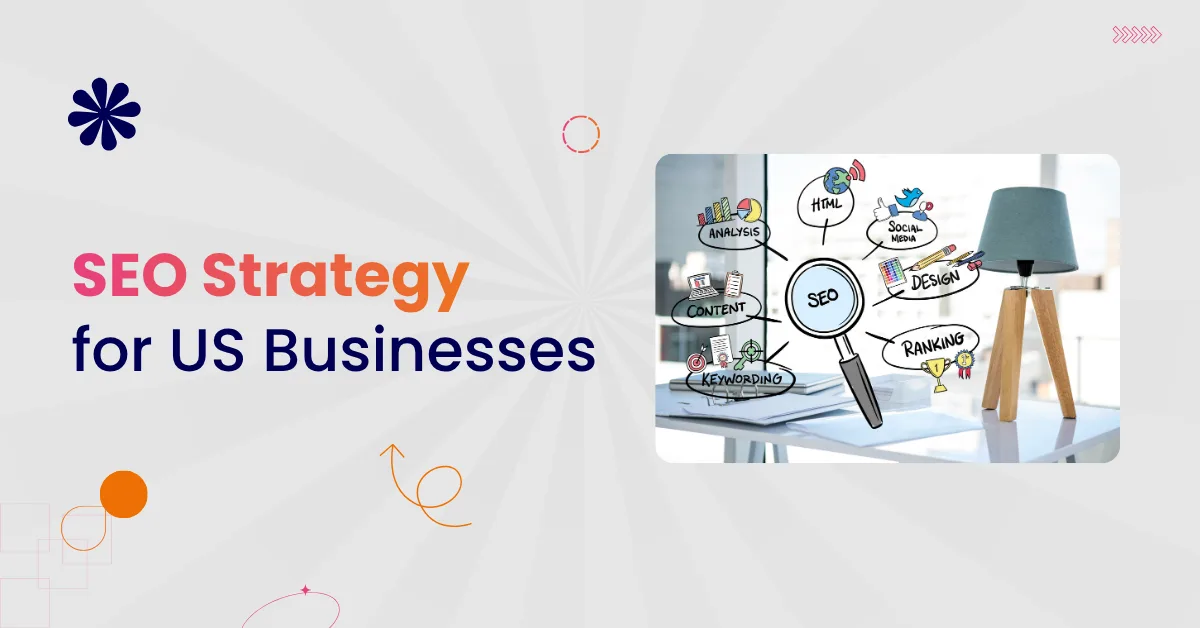
If you are building an SEO strategy for US businesses, the challenge extends beyond ranking on Google. It involves creating consistent visibility in a highly competitive market where user expectations are high, search behavior evolves rapidly, and only well-structured strategies sustain long-term growth.
An effective SEO strategy for US businesses combines technical structure, content alignment, and search intent clarity, supported by data-driven execution and continuous performance analysis. Without this balance, even well-designed websites struggle to generate consistent traffic or qualified leads.
This guide breaks down what drives visibility in an SEO strategy for US businesses, where companies lose traction, and how a structured approach supports scalable growth.
Table of Contents
What is an SEO Strategy for US Businesses?
An SEO strategy for US businesses is a structured approach to improving search visibility through technical optimization, content alignment, and authority building tailored to competitive US search environments.
It includes:
- Technical SEO and website performance
- Content aligned with user search intent
- Internal linking and site structure
- Authority building through backlinks
Why SEO Still Drives Growth for US Businesses
Search remains one of the strongest acquisition channels for US-based companies, contributing to over 50% of trackable website traffic across industries based on multiple industry benchmarks.
Users searching online already have intent. They are looking for a service, comparing options, or are ready to take action. This creates three clear advantages:
- Traffic comes from real demand aligned with search intent
- Visibility builds credibility in competitive US markets
- Results continue over time without constant ad spend
Businesses that invest in SEO build a steady pipeline of traffic that does not depend entirely on paid campaigns.
Why SEO Strategy for US Businesses Requires a Different Approach
The US market behaves differently from smaller or less competitive regions.
Key factors include:
- high keyword competition across industries
- strong local search behavior
- users expecting fast and clean websites
- strict evaluation of content quality and trust signals
A generic SEO approach does not work here. Websites must meet both technical and content expectations to compete.
Core Elements of a Strong SEO Strategy for US Businesses
A strong SEO strategy for US businesses focuses on multiple layers working together to improve visibility, rankings, and conversions.
Technical SEO Foundation
Search engines must access and understand your website.
This includes:
- crawl accessibility
- clean URL structure
- fast loading pages
- mobile performance
Without this foundation, rankings remain limited.
Content That Matches Search Intent
Content in an SEO strategy for US businesses should directly reflect what users are searching for, based on intent-driven keyword mapping and behavioral data.
This involves:
- targeting specific search queries
- answering real questions
- structuring content clearly
Pages that match intent perform better than pages written only for keywords.
Internal Linking Structure
Internal links guide both users and search engines. They help:
- distribute page authority
- improve crawl paths
- connect related topics
A strong internal linking system supports higher rankings across multiple pages.
Authority Through External Signals
Search engines evaluate trust through backlinks. Websites gain stronger visibility when they:
- receive links from relevant sources
- appear in trusted directories
- build consistent online mentions
Authority builds gradually but has a strong impact on rankings, especially in the US market, where high-authority domains dominate competitive search results.
Inbound Marketing vs Paid Advertising
| Factor | Inbound Marketing | Paid Advertising |
| Traffic Source | Organic search and content | Ads and sponsored placements |
| Cost Structure | Investment builds over time | Continuous spending required |
| Longevity | Traffic continues after ranking | Traffic stops when ads stop |
| User Trust | Higher due to organic presence | Lower due to promotional nature |
| Conversion Quality | Higher intent traffic | Mixed intent traffic |
Inbound marketing supports long-term visibility, while paid advertising delivers immediate but temporary results. For most US businesses, combining both works best, but SEO remains the foundation for sustainable growth.
Enterprise SEO vs Traditional SEO
| Aspect | Enterprise SEO | Traditional SEO |
| Website Size | Thousands of pages | Limited pages |
| Complexity | High | Moderate |
| Strategy Focus | Automation and scalability | Manual optimization |
| Technical Requirements | Advanced | Basic to intermediate |
| Ongoing Management | Continuous monitoring | Periodic updates |
Enterprise SEO requires deeper technical control, while traditional SEO focuses more on individual page optimization.
For growing businesses, transitioning from traditional to enterprise SEO becomes necessary over time.
Across US industries:
- Organic search drives approximately 53% of website traffic
- Paid advertising costs continue to rise year over year
- SEO delivers higher long-term ROI compared to paid campaigns
This makes inbound SEO a foundational component of a scalable growth strategy.
Common Gaps That Hold Back SEO Performance
Many businesses invest in SEO but fail to see results. The reason is often hidden gaps in execution.
i. Weak Technical Structure
Issues like slow speed, crawl errors, or poor mobile performance reduce visibility.
ii. Misaligned Content
Content that does not match search intent fails to rank even if it is well written.
iii. Lack of Consistency
SEO requires ongoing updates. Irregular efforts lead to unstable results.
iv. Poor Internal Linking
Without proper linking, pages remain disconnected and harder to rank.
Building a Scalable SEO Strategy for US Businesses
A scalable approach focuses on long-term growth rather than short-term gains.
Step 1: Technical Audit
Identify structural issues affecting crawlability and performance.
Step 2: Keyword Mapping
Align pages with specific search queries based on intent.
Step 3: Content Expansion
Create pages that cover topics in depth rather than isolated content.
Step 4: Internal Linking Framework
Connect pages to strengthen topical relevance.
Step 5: Authority Building
Develop external signals through mentions and backlinks.
Step 6: Continuous Monitoring
Track performance and adjust based on data.
Fix structural gaps, improve rankings, and grow organic visibility with a focused SEO strategy from Varun Digital Media.
How SEO Supports Long-Term Business Growth
SEO is not limited to traffic. It supports:
- brand visibility
- lead generation
- conversion improvement
- long-term digital presence
Businesses that invest in structured SEO often reduce dependency on paid channels over time.
Internal Resources to Strengthen Your SEO Strategy
To build a complete SEO framework, explore these cluster topics:
Inbound Marketing vs Paid Advertising
Understand how organic growth compares with paid campaigns and how to balance both strategies effectively.
Enterprise SEO vs Traditional SEO
Learn how SEO strategies evolve as businesses scale and how to manage large websites efficiently.
Advanced SEO Strategy for US Businesses in Competitive Markets
Search behavior in the US continues to shift as users expect faster answers and more accurate results. Businesses that adapt their SEO Strategy for US Businesses gain a stronger position in competitive industries.
i. Search Intent and Answer-Focused Content
Users no longer search in short phrases. Queries are more specific and often conversational.
To align with this:
- structure content around real questions
- provide clear answers early in the page
- expand with supporting details
This improves visibility for both traditional search and AI-driven results.
ii. Local SEO and Regional Targeting
Many searches in the US include location-based intent. To capture this traffic:
- create location-specific service pages
- optimize business listings with accurate details
- maintain consistency across directories
Local relevance plays a major role in search visibility, especially for service-based businesses.
iii. Technical Performance and Website Speed
Search engines evaluate performance signals closely. Key improvements include:
- faster page loading
- optimized images and scripts
- stable mobile performance
Even small delays in loading time can reduce rankings and conversions.
iv. Structured Data and Search Visibility
Structured data helps search engines understand content more clearly. This allows:
- enhanced search results
- improved click-through rates
- better content interpretation
Websites using structured data often gain stronger visibility compared to standard listings.
How SEO Strategy for US Businesses Aligns with Business Growth
SEO is not just about ranking pages. It connects directly with how businesses attract and convert users. A well-planned SEO Strategy for US Businesses supports:
- consistent lead generation
- higher quality traffic
- improved conversion opportunities
- stronger brand presence
This makes SEO a long-term growth channel rather than a short-term tactic.
Balancing Inbound Marketing and Paid Campaigns
While earlier we compared Inbound Marketing vs Paid Advertising, the real advantage comes from combining both. Inbound marketing builds organic visibility, while paid campaigns provide immediate reach.
Businesses that align both strategies effectively:
- Capture short-term traffic through ads
- Build long-term visibility through SEO
- Reduce dependency on paid spend over time
This balance creates stability in digital growth.
When to Transition from Traditional SEO to Enterprise SEO
As businesses scale, their SEO requirements change. A shift from Enterprise SEO vs Traditional SEO becomes necessary when:
- The website grows beyond a few hundred pages
- Content expands across multiple categories
- Technical complexity increases
- Multiple teams manage content and structure
At this stage, SEO becomes more structured and process-driven rather than page-level optimization.
Common Mistakes in SEO Strategy for US Businesses
Even well-funded businesses make mistakes that slow down growth.
i. Over-Focusing on Keywords
Pages written only for keywords often fail to match user intent.
ii. Ignoring Technical Issues
Hidden errors in crawlability or indexing limit visibility.
iii. Inconsistent Content Updates
Outdated content loses relevance over time.
iv. Weak Internal Linking
Without proper linking, search engines cannot understand content relationships.
Conclusion: Building a Strong SEO Strategy for Long-Term Success
A successful SEO Strategy for US Businesses is built on structure, consistency, and alignment with search intent.
Businesses that improve technical performance, create meaningful content, and strengthen authority gain a lasting advantage in search results. Growth does not come from isolated efforts. It comes from a connected strategy where every element supports visibility and user engagement.
Over time, this approach leads to stable rankings, stronger traffic, and better business outcomes.
Why Businesses Choose Varun Digital Media for SEO Strategy
Varun Digital Media works with businesses that want structured SEO execution with measurable outcomes. The focus is on building a strong search foundation that supports consistent growth. Key strengths include:
- AI-assisted keyword research and analysis
- technical SEO implementation
- structured content planning
- internal linking frameworks
- performance tracking aligned with business goals
This approach connects search visibility with real business outcomes.
How Varun Digital Media Builds SEO Strategy for US Businesses
Varun Digital Media focuses on structured execution rather than isolated SEO activities. The approach includes:
- Identifying search gaps and opportunities
- Improving website structure for better crawl efficiency
- Aligning content with real search intent
- Building internal linking systems that support rankings
- Tracking performance with clear metrics
This creates a stable SEO framework that supports both visibility and business growth.
[cta}
Frequently Asked Questions
1. What is an SEO strategy for US businesses?
An SEO strategy for US businesses is a structured approach to improving search visibility through technical optimization, content alignment, and authority building.
2. How much does SEO cost in the US?
SEO costs vary based on competition and scope, typically ranging from $1,500 to $10,000 per month for structured campaigns.
3. Is SEO worth it for small businesses in the US?
Yes, SEO provides long-term visibility and reduces dependency on paid advertising, making it highly effective for sustainable growth.
4. What is the best SEO strategy for US businesses?
The best strategy combines technical SEO, intent-driven content, internal linking, and authority building aligned with market competition.
5. How long does SEO take to show results?
Most businesses begin seeing measurable changes within three to six months. Competitive industries may take longer depending on website authority and structure.
6. Is SEO better than paid advertising?
SEO supports long-term growth, while paid advertising delivers immediate traffic. Both work best when used together.
7. Why is technical SEO important?
Technical SEO ensures search engines can access, crawl, and index your website properly. Without it, rankings remain limited.
8. When should a business consider enterprise SEO?
Businesses should consider enterprise SEO when managing large websites, multiple categories, or complex site structures.
Published: March 26th, 2026