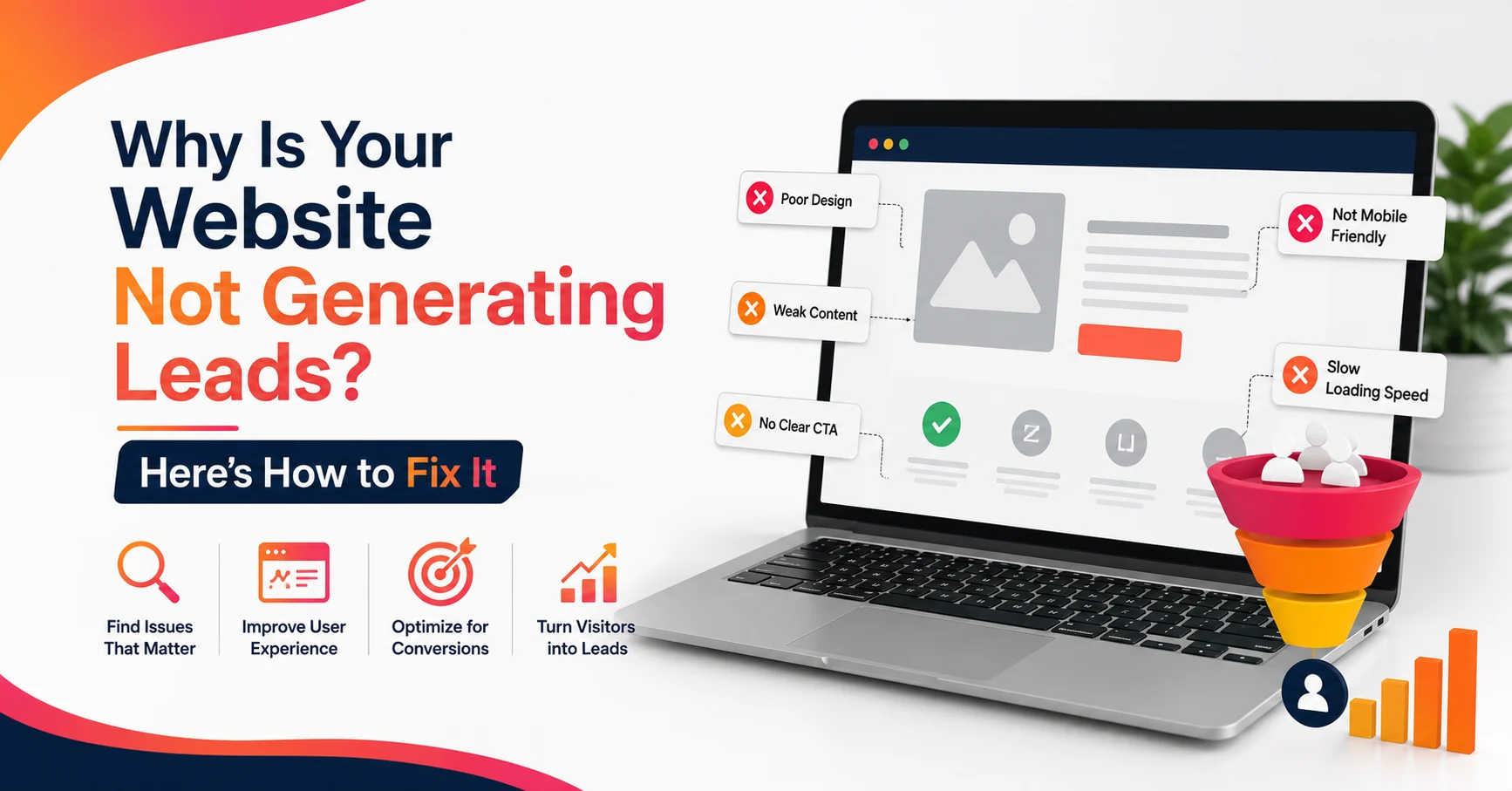
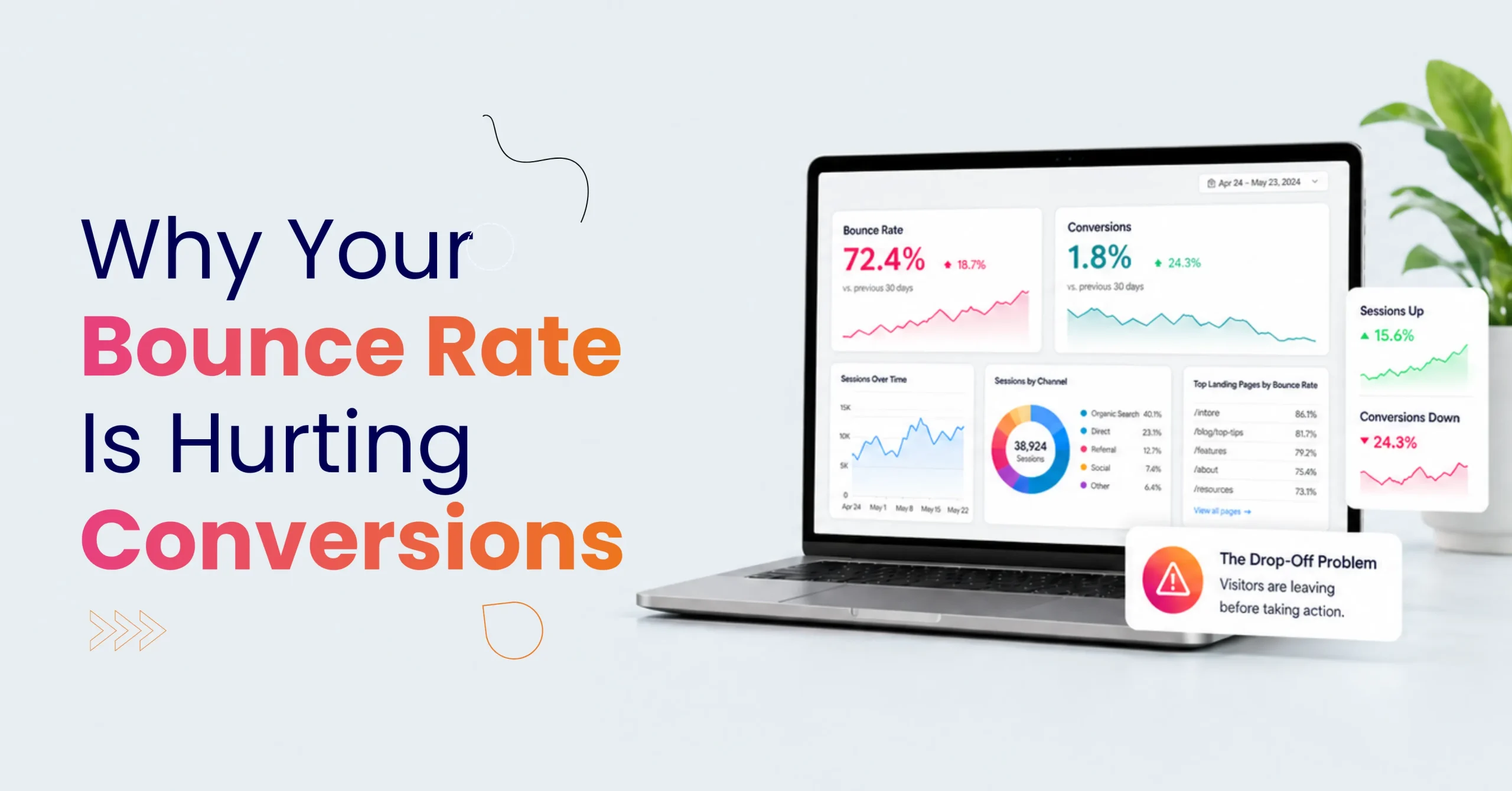
If you are seeing traffic but no results, Why Bounce Rate Can Kill Your Site’s Conversions becomes a serious concern. Many businesses assume that getting visitors is enough, but bounce rate conversions tell a very different story.
That single moment decides whether your website becomes a growth channel or just a traffic report. When bounce rate increases, conversions drop. Not gradually. Directly.
Table of Contents
What is Bounce Rate?
Bounce rate is the percentage of visitors who land on a page and leave without taking any action, such as clicking, scrolling, or visiting another page. A high bounce rate often signals poor user experience or mismatched intent.
How High Bounce Rate Impacts Your Website Conversions
A bounce happens when a user lands on a page and leaves without taking any action.
That action could be:
- Clicking a button
- Scrolling deeper
- Visiting another page
- Submitting a form
When none of this happens, the session ends instantly. This is where most businesses misread performance. Traffic may look healthy. Rankings may look stable. Yet conversions stay low because visitors never move beyond the first interaction.
Bounce Rate Conversions: What the Metric Really Means
Bounce rate is often treated as a surface-level metric. It is not.
It reflects:
- First impression quality
- Content relevance
- Page clarity
- User confidence
A high bounce rate signals one clear thing. The page did not meet expectations fast enough. In conversion-focused environments, this becomes critical. Because every bounce is a missed opportunity.
Why Your Bounce Rate Is Hurting Conversions Even With Traffic
Traffic alone does not create results. Behavior does. You can attract visitors consistently and still lose them within seconds if the page fails to connect.
This happens when:
- The message does not match the search
- The layout creates confusion
- The content delays clarity
- The next step is unclear
Bounce rate is not about visitors leaving. It is about visitors leaving without engaging. That is where conversions break.
The Hidden Gap Between Engagement and Conversion
From the reference patterns: Users arrive with intent. They expect a clear outcome.
Within seconds, they decide:
- Stay and explore
- Or leave and search again
This decision is not random. It is driven by what they see immediately:
- Headline clarity
- Content alignment
- Visual structure
- Page speed
If any of these fail, engagement drops before conversion even begins.
What Causes High Bounce Rate and Conversion Drop
These are the actual triggers behind the bounce rate and conversion loss.
Slow Page Experience
Speed directly impacts engagement. Even a delay of a few seconds:
- Reduces interaction
- Breaks attention
- Increases exits
Visitors do not wait for pages to load.
Mismatch Between Search and Content
A user clicks based on expectation. If the page does not match:
- They leave instantly
- Trust declines
- Conversion chance disappears
This is one of the strongest bounce triggers.
Weak Visual Structure
Users scan before they read. If the page looks:
- cluttered
- unstructured
- overwhelming
They exit before understanding anything.
No Clear Next Step
Even interested users hesitate without direction. If the page does not guide:
- What to do
- Where to click
- Why it matters
They leave without acting.
Content That Delays Clarity
Users are not reading to explore. They are reading to decide.
If content:
- takes too long to get to the point
- lacks clarity
- avoids direct answers
They exit early.
Poor Mobile Experience
A large portion of traffic comes from mobile devices.
If the page:
- breaks layout
- loads slowly
- becomes hard to navigate
Bounce rate increases immediately.
Bounce Rate vs Exit Rate: Understanding the Difference
| Metric | What It Measures | Impact on Conversions |
| Bounce Rate | Visitors leaving after one page | Indicates weak first interaction |
| Exit Rate | Visitors leaving after multiple pages | Indicates a drop-off in the journey |
Bounce rate highlights where users never begin the journey. Exit rate shows where they stop midway. Both matter, but bounce rate affects the starting point.
What Is a Good Bounce Rate for Conversions
There is no single number that defines success.
However, patterns show:
- 25% to 40% indicates strong engagement
- 40% to 60% is acceptable, depending on page type
- Above 60% signals performance gaps
- Above 80% requires immediate attention
Context matters. For blogs, higher bounce rates can still deliver value. For service or landing pages, high bounce rates directly reduce conversions.
Why Bounce Rate Can Kill Your Site’s Conversions on Landing Pages
Landing pages are built for one purpose. Action. When the bounce rate increases here:
- Lead generation drops
- Cost per lead increases
- Campaign performance weakens
Most landing pages fail because:
- The message does not match the source
- Too many distractions exist
- Forms create friction
- Value is unclear
Visitors should understand what to do within seconds. If not, they leave.
How Page Speed Impacts Bounce Rate Conversions
Speed is one of the strongest factors influencing bounce. Behavior patterns show:
- At 3 seconds, users start leaving
- At 5 seconds, exits increase sharply
- Beyond that, engagement collapses
Faster pages hold attention. Slower pages lose it before interaction begins.
Studies show that when page load time increases from 1 second to 3 seconds, the probability of bounce increases by over 30%. At 5 seconds, it can exceed 90%. This makes speed one of the most critical factors affecting both engagement and conversions.
Real Example: How Reducing Bounce Rate Improved Conversions
In one case, optimizing page speed and improving content clarity reduced bounce rate from 72% to 48%. As a result, conversions increased by over 35% within 6 weeks.
The key changes included:
- Faster load time
- Clear headline alignment
- Strong call-to-action placement
How Traffic Source Affects Bounce Rate Conversions
Not all traffic behaves the same. Different sources bring different intent:
- Email traffic shows higher engagement
- Organic search depends on keyword alignment
- Paid traffic varies based on targeting
- Social traffic often has lower intent
When traffic intent does not match page intent, bounce increases.
Why Monitoring Bounce Rate Is Critical for Conversion Growth
Bounce rate highlights where performance breaks.
It helps identify:
- pages that fail to engage
- content that misses intent
- design issues affecting behavior
Without this insight, optimization becomes guesswork. With it, improvements become focused.
When High Bounce Rate Does Not Hurt Conversions
Not every bounce is a failure. Some scenarios include:
- Users find answers quickly
- Single-page conversions occur
- Informational intent is satisfied
In these cases, bounce rate can be high while still delivering value. The key is to evaluate it based on the page’s purpose.
How to Reduce Bounce Rate and Improve Conversions
Reducing bounce rate is not about tricks. It is about fixing what users experience in the first few seconds. The moment a visitor lands, three things must be clear:
- Where they are
- What they get
- What to do next
If any of these are missing, the bounce rate increases.
Align Content With Intent to Fix Bounce Rate Conversions
Every visit starts with a search or click. If the page does not match that expectation:
- Users leave immediately
- Engagement drops
- Conversions never begin
Fix this by:
- Matching headlines with search queries
- Delivering answers without delay
- Structuring content around decision points
This alone can reduce bounce significantly.
Improve Page Structure to Control Bounce Rate Conversions
Structure determines how long users stay. Strong pages:
- guide the eye naturally
- break information into clear sections
- highlight key actions
Use:
- short paragraphs
- clear headings
- visual spacing
When content feels easy to consume, users stay longer.
Strengthen Call Flow to Improve Bounce Rate Conversions
Visitors rarely take action without guidance. A clear progression should exist:
- awareness
- interest
- action
Every page must lead somewhere. Without this, even interested users leave.
Optimize Speed to Protect Bounce Rate Conversions
Speed directly affects engagement. Improvement areas:
- image compression
- script reduction
- faster hosting
Even small delays increase bounce. Faster pages create stronger engagement signals.
Design for Clarity to Reduce Bounce Rate Conversions
Design influences trust instantly. Users judge within seconds based on:
- layout
- readability
- visual flow
If the page looks confusing, they leave before reading. Clean design increases time spent and interaction.
Bounce Rate Conversions vs Engagement-Focused Optimization
| Performance Area | Bounce Rate Conversions Problem | Engagement-Focused Optimization |
| First Impression | Unclear messaging | Immediate clarity |
| Content Delivery | Delayed answers | Direct and structured |
| Page Experience | Friction and confusion | Smooth navigation |
| User Direction | No defined path | Guided progression |
| Interaction | Passive reading | Action-driven flow |
| Conversion Outcome | Visitors leave early | Visitors move forward |
This comparison is not about competitors. It reflects two different execution approaches. One attracts visitors, and the other converts them.
Why Bounce Rate Can Kill Your Site’s Conversions in B2B Environments
In B2B, decisions are not instant. Visitors evaluate:
- relevance
- credibility
- clarity
If the page fails early:
- trust breaks
- attention drops
- conversion path ends
High bounce rate in B2B does not just reduce leads. It reduces pipeline quality.
How Bounce Rate Conversions Affect Revenue Performance
Every bounce is a lost opportunity. The impact includes:
- Fewer inquiries
- Reduced deal flow
- Lower ROI from traffic
Even strong traffic volumes fail when engagement is weak. Improving bounce rate increases:
- Session duration
- Interaction depth
- Conversion probability
This is where growth actually happens.
Advanced Strategies to Improve Bounce Rate Conversions
Beyond basic fixes, deeper optimization creates a measurable impact.
Use Behavioral Insights to Reduce Bounce Rate Conversions
Track how users interact:
- scroll depth
- click patterns
- drop-off points
This reveals where engagement breaks. Adjust content accordingly.
Build Multi-Step Engagement Paths
Instead of expecting immediate conversion:
- guide users through stages
- introduce progressive interaction
Examples:
- content to service page
- service page to consultation
This reduces bounce naturally.
Strengthen Internal Navigation Flow
Internal links help users explore further.
Use:
- contextual links
- relevant suggestions
- next-step prompts
This increases session depth.
Optimize Above-the-Fold Content
The first screen determines engagement. It must:
- communicate value instantly
- remove confusion
- guide action
If this fails, the rest of the page does not matter.
Why Bounce Rate Can Kill Your Site’s Conversions Even With Strong SEO
SEO brings visibility. Bounce rate determines performance. You can:
- Rank well
- Attract traffic
Yet still fail to convert. Because conversion depends on:
- experience
- clarity
- direction
Not just rankings.
Internal Growth Opportunities Through Bounce Rate Optimization
Improving bounce rate is not an isolated task. It connects with:
- SEO performance
- content clarity
- page design
- conversion structure
This is where internal alignment matters. For example:
- SEO Services pages must align with search intent
- Website Design Services must support usability. A clean design improves engagement and reduces bounce significantly.
- Content Marketing Services must drive engagement
- PPC and landing pages must guide action
When these work together, bounce rate reduces naturally and conversions improve consistently.
Final Perspective on Bounce Rate Conversions
Bounce rate is not just a number. It reflects how users respond to your page. If they leave early: Something is unclear, missing, and misaligned. Fixing bounce rate improves more than engagement. It improves outcomes.
How Varun Digital Media Improves Bounce Rate Conversions
At Varun Digital Media, the approach is not limited to traffic generation. The focus stays on how visitors move after landing.
Each page is built around:
- Clear entry intent
- Structured progression
- Defined action paths
The process includes:
- Identifying where users drop
- Restructuring content flow
- Refining page experience
- Aligning the message with the decision stages
The goal is simple. Keep the user moving. Because movement leads to conversion.
Get Measurable Growth From Your Traffic
Stop losing visitors before they act. Turn your pages into conversion-focused experiences that guide users from first click to final action.
Frequently Asked Questions
1. Why is bounce rate hurting conversions even with good traffic?
Traffic does not guarantee results. If visitors do not find what they expected or are not guided clearly, they leave without taking action. This reduces conversions even when traffic is high.
2. What is a bad bounce rate?
A bounce rate above 60% is generally considered high and may indicate issues with content relevance, page speed, or user experience.
3. Does bounce rate affect SEO rankings?
Bounce rate is not a direct ranking factor, but it reflects user behavior, which indirectly influences rankings through engagement signals.
4. How do I reduce bounce rate quickly?
Improve page speed, match content with search intent, and add clear calls to action.
5. How to fix the bounce rate conversions drop quickly?
Improve intent alignment, simplify page structure, and add clear next steps. Even small adjustments in clarity and direction can increase engagement and conversions.
6. Can technical issues increase bounce rate and conversion loss?
Yes. Slow loading, poor mobile experience, broken elements, or navigation issues cause users to leave early. These issues directly reduce interaction and conversions.
7. How long does it take to improve bounce rate conversions?
Some improvements show results within a few weeks. Larger structural and content changes take a few months to stabilize and deliver consistent outcomes.
8. Is bounce rate or conversion rate more important?
Conversion rate matters more. Bounce rate indicates where engagement breaks, while conversion rate reflects actual outcomes. Both must be aligned for strong performance.
Published: April 30th, 2026