AI search optimization is the process of making content easier for AI systems to understand, extract, and cite in answers. As users shift from blue-link browsing to AI-generated answers in ChatGPT, Google AI Overviews, Perplexity, and Gemini, brands now need pages that are not only rankable but also citation-ready.
If your content is still written only for classic rankings, part of the search journey is being missed. A page can rank well and still stay invisible inside AI summaries. That is where ai seo, generative search optimization, and aeo answer engine optimization become more important. At Varun Digital Media, we see this as the next working layer of search visibility because discovery now happens across rankings, summaries, citations, and conversational search flows.
For example, AI tools like ChatGPT or Perplexity may extract only one section of your page instead of showing the full article.
This guide explains what AI search optimization means, why it matters, how it differs from SEO, and the best techniques to improve AI visibility across answer-led search systems.
Table of Contents
What Is AI Search Optimization?
AI search optimization is the process of shaping content so AI systems can understand it, retrieve it, and use it in answers, summaries, citations, and recommendations. It applies to search experiences such as ChatGPT, Google AI Overviews, Google AI Mode, Perplexity, Gemini, and other systems that synthesize information instead of showing a simple ranked list of results.
Traditional search asks users to evaluate links on their own. AI search reduces that step. The platform reads, compares, compresses, and presents an answer. Your content either supports that answer or it does not.
That makes how to optimize content for AI search results in 2026 a much more direct question than it seems. The job is not to repeat phrases until they rank. The job is to create information that answer engines can confidently use.
In practical terms, strong AI visibility usually depends on three things:
- clear answers
- clear structure
- clear trust signals
If one of those is weak, your content becomes harder to cite.
AI Search Optimization Quick Overview
| Area | What It Means |
| AI search optimization | Making content easier for AI systems to retrieve, cite, and recommend |
| Main goal | Improve mentions, citations, and visibility in AI-generated answers |
| Key platforms | ChatGPT, Google AI Overviews, Perplexity, Gemini, Claude |
| Core requirements | Clear answers, strong structure, technical accessibility, trust signals |
| Main difference from SEO | SEO aims for rankings, while AI search optimization aims for answer-level visibility |
| Best first step | Improve high-value pages so they answer the main question early and clearly |
How AI Search Optimization Differs From SEO
A lot of marketers still ask whether this is just SEO with a new label. The better answer is that it builds on SEO, though it asks for a different end result.
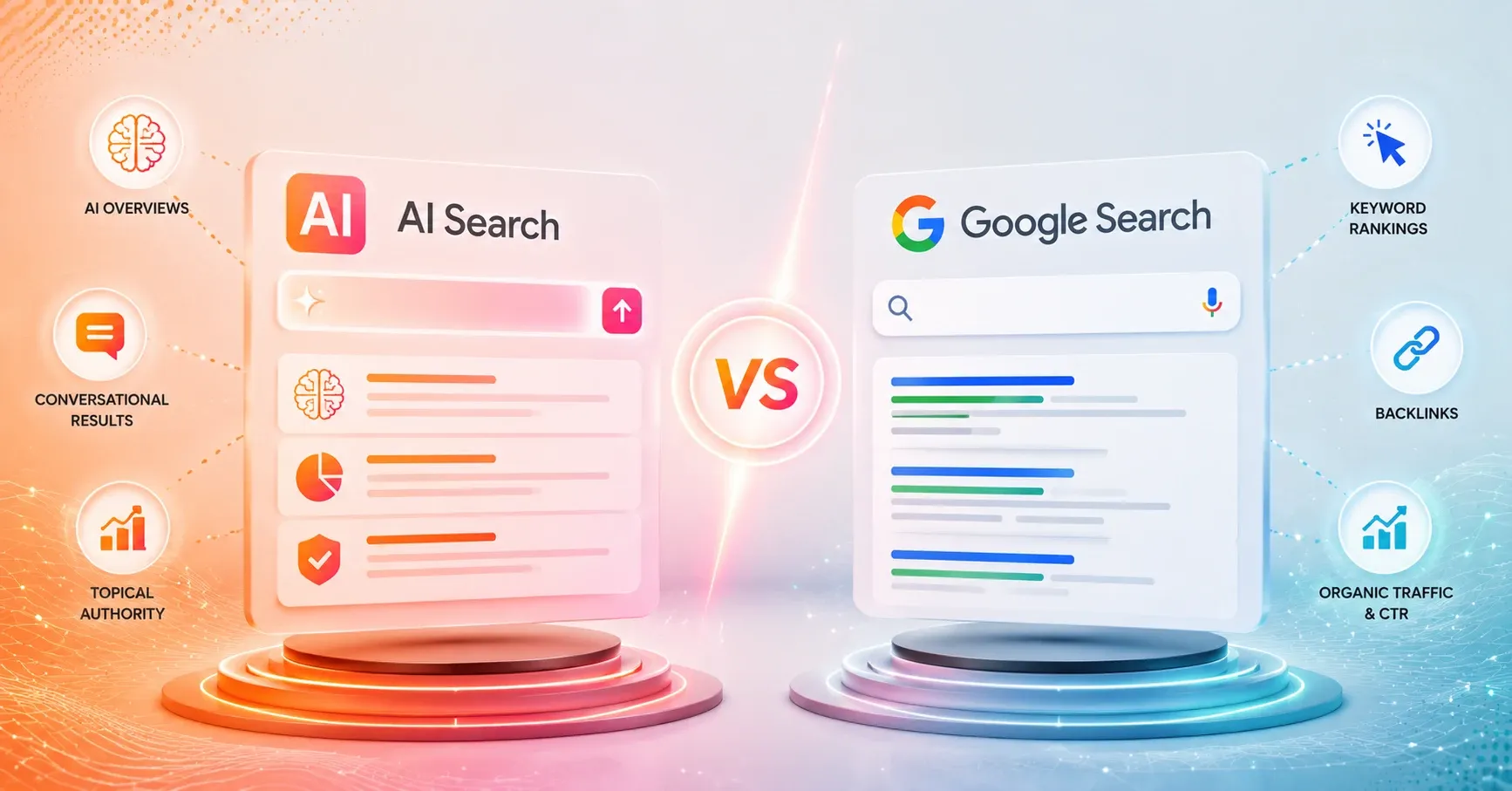
AI search optimization vs traditional SEO
SEO aims to help pages rank in search results. AI search optimization aims to help pages get cited, quoted, summarized, and recommended in AI-generated responses.
That difference changes what success looks like. With classic SEO, a strong position could drive traffic even if the user did not read much of the snippet. With AI search, the answer engine may pull one section, combine it with several other sources, and give the user a finished response before they ever click through.
Where the overlap still matters
You still need:
- crawlable pages
- clean internal linking
- strong topical coverage
- helpful page structure
- fast loading pages
- trust and authority signals
So this is not a case of abandoning SEO. It is a case of extending it into answer-led discovery. That is why many teams now connect entity based seo, traditional organic strategy, and zero-click search optimization into one broader visibility plan.
Why AI Search Optimization Matters Now
The importance of AI visibility is no longer theoretical. Search behavior has already changed.
Users now do things like:
- Ask complete questions instead of short keyword strings
- Compare products inside AI tools before visiting websites
- Request follow-up explanations in the same conversation
- Trust summaries to narrow options before clicking
This matters for three reasons.
AI systems influence early brand preference
A user can hear about your category, compare your competitors, and form an opinion about your offer before your site ever receives a visit. If your brand is missing from that answer layer, you may lose ground earlier than you realize.
AI-referred visitors often arrive with more context
Someone who clicks after reading an AI-generated answer is often deeper into the research process. They are not browsing cold. They are usually trying to confirm fit, pricing, use case, or proof.
Search is becoming more answer-led
This is where how to appear in AI-generated answers turns into a serious business question. If users get the answer without visiting a site, visibility shifts from position to citation. That is why conversational search optimization deserves a place in the same planning process as SEO, content strategy, and digital PR.
Best AI Search Optimization Techniques
The strongest AI visibility usually comes from a few repeated habits. It is not about gaming one system. It is about publishing content that answer engines can trust and extract.
AI Search Optimization Technique 1: Make Sure AI Systems Can Access Your Content
Before looking at page copy, confirm that AI systems can read your content in the first place. Some brands accidentally block access through technical choices, such as:
- crawler restrictions in robots.txt
- heavy script dependence
- broken canonicals
- pages hidden behind interaction layers
- weak rendering on key sections
If answer engines cannot access the content properly, they cannot cite it consistently.
This is one of the simplest parts of the best strategies for AI SEO, though it gets ignored more often than it should. A technically clean page does not guarantee citations, but a technically blocked or confusing page makes them much less likely.
AI Search Optimization Technique 2: Answer the Main Question Early
A lot of pages lose AI visibility because they circle the topic before actually answering it. That style weakens extractability.
If your heading asks a question, the first paragraph beneath it should answer that question clearly. After that, you can expand, compare, qualify, or deepen the point.
For example, if the heading is about how to optimize for AI overviews, the opening lines should explain the core method right away rather than spending several lines warming up the topic.
This approach helps in two ways. It improves reader clarity and also gives answer engines a cleaner passage to cite.
AI Search Optimization Technique 3: Structure Content in Self-Contained Sections
AI systems often pull one chunk of content at a time. That means each section should stand on its own.
A useful section usually includes:
- a question or clear topical heading
- a direct answer
- supporting detail
- one concrete example, proof point, or clarification
If a section only makes sense after reading five earlier paragraphs, it becomes harder for AI systems to use it cleanly.
This is especially important for how to rank in Google AI overviews, where structure, directness, and section-level clarity often shape whether a page is referenced.
AI Search Optimization Technique 4: Add Specific Statistics and Named Proof
Generic claims are easier to ignore. Specific facts are easier to cite.
Instead of saying a trend is growing, show the number. Instead of saying a process worked, show what changed and over what time frame. Instead of making a broad claim about performance, attach a source, a date, and a real result.
This matters because AI systems respond better to content that feels attributable. It also makes your writing stronger for human readers who want something they can trust and repeat.
At Varun Digital Media, this is one of the first upgrades we look for when reviewing content meant for AI visibility. A page with clean proof tends to hold more citation value than a page built on broad statements alone.
AI Search Optimization Technique 5: Build for Query Fan-Out
AI systems do not stop at the first question. They often expand the prompt into related sub-questions behind the scenes.
Someone asking about AI seo may also trigger follow-up angles such as:
- How AI Overviews choose sources
- How AEO differs from SEO
- How off-site mentions affect AI visibility
- Whether schema helps answer engines
- Which pages are best suited for AI search discovery
That means strong pages should cover the main topic and the likely follow-up questions around it. This is where generative search optimization becomes more than one heading. It becomes a content architecture decision.
A page that answers the main question and the predictable next questions has a better chance of remaining visible across a wider prompt range.
AI Search Optimization Technique 6: Use Schema Markup Where It Helps Clarity
Schema does not force AI systems to cite you, though it helps search systems understand the page more clearly.
Useful markup types often include:
- Article
- FAQ
- HowTo
- Product
- Review
- Organization
When applied correctly, schema supports context, structure, and meaning. It can also support visibility in classic search features, which still matter because many AI systems rely on search indexes, trusted page structure, and existing SERP patterns.
This is one of the reasons AEO answers engine optimization and technical SEO still work closely together.
AI Search Optimization Technique 7: Make Your Content Quotable
The most cited content often contains lines that can stand on their own.
That usually means:
- clear phrasing
- sharp comparisons
- specific examples
- named outcomes
- short insights that can be reused without confusion
A quotable line is easier to lift into an AI answer than a paragraph full of vague wording.
This does not mean writing for slogans. It means writing with enough clarity that one sentence can still carry value when extracted from the page.
AI Search Optimization Technique 8: Keep Important Pages Fresh
AI systems often prefer pages that feel current, especially in fast-changing topics. That does not mean every page needs constant rewriting.
It means high-value pages should be reviewed for:
- outdated examples
- old screenshots
- stale statistics
- missing developments
- weak current context
If you want stronger visibility for how to optimize content for AI search results in 2026, freshness matters even more because the user expects current relevance, not recycled guidance from years ago.
AI Search Optimization Technique 9: Strengthen Off-Site Entity Signals
Answer engines do not rely only on what your site says about your brand. They also pay attention to what the rest of the web says.
That includes:
- digital PR mentions
- expert quotes
- community discussions
- review platforms
- LinkedIn content
- niche publications
- relevant forum references
This is where entity based seo becomes useful. If your brand is described clearly and consistently across trusted places, answer engines have more reason to treat you as a real source instead of just another page in the index.
AI Search Optimization Technique 10: Write for Human Readers, Then Refine for Machines
The strongest AI search content still reads like it was written for a real person with a real question. Machine-friendly structure matters, though it should not flatten the page into sterile copy.
A strong page usually sounds:
- direct
- informed
- calm
- specific
- useful
That balance matters. If a page sounds robotic, it weakens trust. If it sounds clever but avoids clarity, it weakens extractability. The best-performing pages tend to do both jobs well.
AI Search Optimization Technique 11: Build Pages Around Real Search Questions
Many websites still build pages around broad themes and hope the reader will find the answer somewhere in the middle. AI systems work better when the page is shaped around the exact question a user is asking.
That means your page structure should reflect real query language, such as:
- What is AI search optimization
- How to optimize for AI Overviews
- How to appear in AI-generated answers
- How to rank in Google AI Overviews
- What is the difference between AEO and SEO
When the heading matches the question, and the first paragraph answers it clearly, the page becomes easier to retrieve, easier to interpret, and easier to cite. This is one of the strongest working methods in conversational search optimization, because it follows the way people now search inside AI tools instead of forcing old search habits onto a new format.
AI Search Optimization Technique 12: Create Topic Clusters, Not Isolated Articles
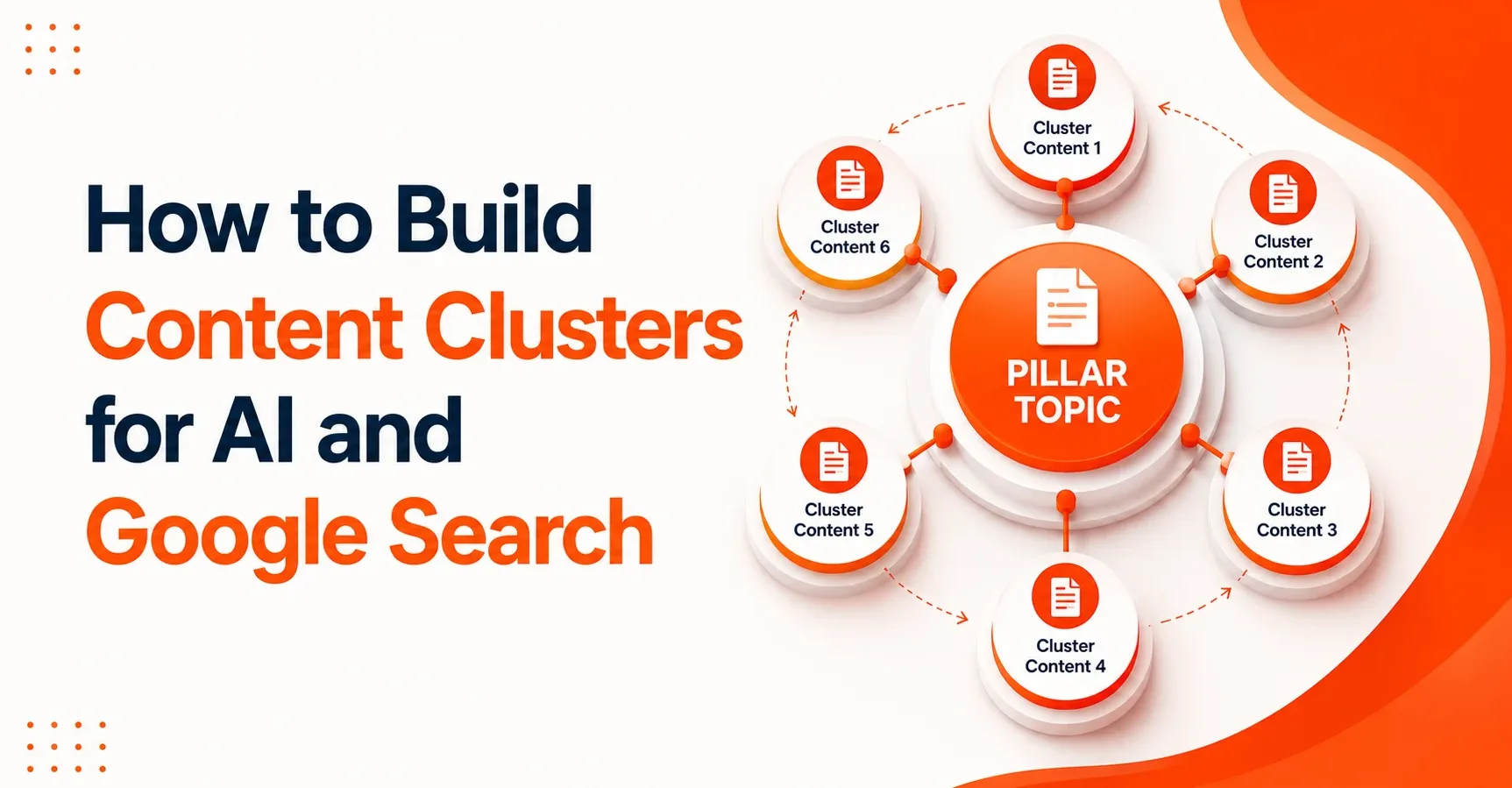
A single strong page can earn visibility, though repeated citations usually come from brands that show depth around a topic. If your site has one article on AI search and nothing else that supports it, answer engines have less reason to treat your brand as a dependable source.
A stronger setup would connect the main article with supporting pages around:
- aeo answer engine optimization
- entity based seo
- zero click search optimization
- how to optimize for AI overviews
- how to rank in google AI overviews
- how to optimize content for AI search results in 2026
This kind of structure helps answer engines understand that your site is not touching the topic once and moving on. It shows that your brand has repeated coverage, supporting context, and stronger topical depth. That usually improves citation confidence over time.
AI Search Optimization Technique 13: Use Tables, Lists, and Clear Comparison Blocks
AI systems often work well with content that separates ideas cleanly. A table can help compare SEO and AI search. A numbered list can make a process easier to extract. A side-by-side block can help answer engines identify the main distinction between related concepts.
This does not mean every section needs a list. It means information should be presented in a form that is easy to scan and easy to reuse.
For example, if you are explaining generative search optimization, a comparison block that shows how it differs from old ranking logic may be more useful than several long paragraphs saying the same thing with slightly different wording.
AI Search Optimization Technique 14: Add Expert Framing and Author Credibility
AI systems and users both look for signs that the writer knows the subject. That can come from direct experience, visible expertise, named authorship, or useful analysis that clearly comes from practice rather than surface-level rewriting.
A strong author setup often includes:
- a real author name
- a short bio tied to the subject
- visible editorial ownership
- pages that connect the writer to related topics
- a clear brand voice across the site
This matters even more for AI seo and answer-engine content because there is already a flood of generic writing on the web. Authority becomes easier to trust when the person or brand behind the page is visible and consistent.
AI Search Optimization Technique 15: Match Content to Search Stage
Not every AI query sits at the same point in the buying process. Some users want a definition. Others want comparisons. Others want a clear recommendation or next step.
Your content library should reflect that range.
Top-of-funnel AI queries
These include educational prompts such as “what is AI search optimization” or “how do AI Overviews work.” These pages need definitions, clarity, examples, and trust-building detail.
Mid-funnel AI queries
These include comparison-based prompts such as “AEO vs SEO” or “best strategies for AI seo.” These pages need sharper structure, clearer contrasts, and practical detail.
Lower-funnel AI queries
These include solution-oriented prompts such as “best AI search optimization services” or “how to improve AI visibility for my website.” These pages need proof, positioning, and a cleaner path to action.
When brands publish only broad educational content, they miss part of the journey. When they publish only service pages, they miss the discovery stage. Strong AI search optimization works better when both ends of the journey connect.
Common AI Search Optimization Mistakes to Avoid
As the topic grows, more teams are publishing content for AI visibility, though a lot of that work still misses in familiar ways.
Writing pages that answer nothing directly
Some pages talk around the subject instead of addressing it. These pages may feel polished, though they are difficult to cite.
Publishing generic summaries with no proof
If a page says the same thing as dozens of others, answer engines have little reason to choose it.
Treating AI visibility as separate from SEO
A weak technical base still hurts. Slow, messy, thin, or poorly linked pages do not become strong just because the topic is AI search.
Ignoring off-site mentions
Answer engines often learn trust from the wider web, not just from your own domain.
Updating nothing for months
A page that once looked useful can quietly become stale. In AI search, that often weakens citation value sooner than many teams expect.
Tools That Help You Work on AI Search Optimization
Manual review is still useful, especially at the start, though a stronger workflow usually combines several inputs.
Research tools
Use keyword research, People Also Ask, internal site search, Reddit, Quora, and sales-call language to understand real question patterns.
Technical tools
Use crawl tools, schema validators, page-speed checks, and rendering checks to make sure answer engines can read what matters.
Visibility review tools
Use AI platform testing, referral analysis, branded search tracking, and topic-based monitoring to see where your content is appearing and where it is missing.
The point of these tools is not to replace judgment. It is to make the blind spots easier to see.
How to Measure AI Search Optimization Success
Measurement needs to go beyond rankings alone. A better review usually looks at:
- mentions in AI-generated answers
- citations across ChatGPT, Perplexity, Gemini, and Google AI surfaces
- referral traffic from AI tools
- branded search lift
- topic-level visibility
- improvement in assisted conversions from AI-originating sessions
A page may not bring massive clicks and still be doing useful work if it increases brand presence during the research stage. That is where zero-click search optimization becomes part of the bigger performance story. Visibility without immediate traffic still has value when it shapes recall, preference, and later searches.
How AI Search Optimization Changes by Platform
Not every answer engine retrieves and presents information in the same way, so a page that appears in one AI system may not perform equally well in another.
Google AI Overviews
Google often relies on pages that already show strong organic trust, clear structure, and concise answers near the top of the section.
ChatGPT
ChatGPT tends to reward pages that are highly readable, attributable, and useful when broken into clean passages.
Perplexity
Perplexity often cites more sources than other platforms, which makes quotable sections, supporting data, and clear formatting especially useful.
Gemini and other answer-led systems
These systems often perform better with pages that combine strong structure, freshness, and clean factual support.
How Varun Digital Media Approaches AI Search Optimization as a System
At Varun Digital Media, AI search optimization is not treated as a one-page tweak or a passing tactic. It works best as a system built from strong content structure, clearer trust signals, technical readiness, and broader topic authority.
That means the work often includes:
- rewriting key pages for direct answers
- expanding topic clusters around AI search questions
- strengthening author and brand signals
- improving schema and page structure
- identifying where off-site mentions are missing
- aligning content with real buyer language
This matters because AI visibility is rarely won by one isolated change. It usually improves when the whole publishing system becomes easier to trust and easier to cite.
Conclusion
AI search optimization is now part of how brands stay visible, trusted, and discoverable in modern search. People are asking longer questions, relying on AI-generated summaries, and forming opinions before they ever reach a website. That shift means content now has to do more than rank. It has to answer clearly, hold up as a source, and give answer engines something worth citing.
The strongest pages usually share the same pattern. They answer the main question early, keep sections clean, support claims with proof, stay current, and show real topical depth. They also work across the wider web, where brand mentions, authority signals, and consistency help search engines decide what to reference.
For brands that want stronger AI visibility, the goal is not to rewrite everything at once. It is to improve the pages that matter most, tighten structure, expand useful topic coverage, and make the content easier to trust and extract. At Varun Digital Media, we treat this as a search visibility system built for how people now discover, compare, and choose online.
Start Building AI Visibility That Compounds
Make your brand easier to cite, easier to trust, and easier to discover across answer-led search platforms.
Frequently Asked Questions
1. What is AI search optimization?
AI search optimization is the process of shaping content so that answer engines and AI search systems can understand, extract, cite, and recommend it in response to user questions.
2. How is AI search optimization different from SEO?
SEO helps pages rank in classic search results, while AI search optimization helps content appear in AI-generated answers, cited summaries, and conversational search experiences.
3. How to optimize for AI overviews?
Start by making sure your content is indexable, answer the main question early, use a clear section structure, support claims with proof, and keep important pages current.
4. What are the best strategies for AI seo?
The strongest tactics include direct-answer formatting, stronger statistics and proof, clean schema, query fan-out coverage, technical accessibility, stronger entity signals, and regular updates.
5. How to appear in AI-generated answers?
Create answer-friendly sections, use question-based headings, make content quotable, strengthen trust signals on and off your site, and publish pages that are easier for answer engines to extract and cite.
6. What is the best starting point for AI search optimization?
The best starting point is to improve your highest-value pages by answering the main query early, tightening structure, adding proof, and making the content easier for answer engines to extract.
7. How to optimize for AI overviews without rebuilding an entire site?
Start by updating existing pages that already have topical relevance. Add direct answers, fresher examples, stronger supporting data, and cleaner heading structure before expanding into new topic clusters.
8. Does AI seo replace traditional SEO?
No. AI SEO builds on traditional SEO. You still need crawlable pages, strong internal linking, clear structure, and trustworthy content. AI visibility grows more easily when the SEO base is already strong.
9. How to rank in Google AI overviews more consistently?
Pages that tend to appear more often usually answer the main question quickly, use clear formatting, include proof, stay current, and already show signs of trust in organic search.
10. How to appear in AI-generated answers if my site is smaller?
Smaller sites can still earn citations when the content is direct, useful, well-structured, current, and specific. AI systems do not only cite the biggest domains. They also cite pages that answer the question cleanly.
Published: June 22nd, 2026