Most businesses capture leads with several strategies and efforts. But they lose them in the silence that follows.
A prospect downloads a guide, requests information, or visits a pricing page. Then nothing relevant happens for a few days or weeks. A generic “just checking in” message follows days later, after a competitor has already answered the real question.
A well-planned lead nurture workflow closes that gap. It turns random follow-up into a timely journey that moves cold leads toward a conversation without making every interaction feel like a sales pitch.
Need a system that keeps qualified prospects moving?
Explore Varun Digital Media’s email marketing services for strategy, automation, and conversion-focused campaigns.
Table of Contents
What Is a Lead Nurture Workflow?
A lead nurture workflow is an automated sequence of messages and actions triggered by a prospect’s behavior, profile, or sales-funnel stage.
It may include emails, retargeting, content, CRM updates, lead scoring, and personal follow-up. The objective is not more messaging. It is delivering the next useful message at the right time.
Strong lead nurturing strategies identify what a lead needs now, what they should understand next, which behaviors signal intent, and when sales should step in.
Why Do Promising Leads Go Cold?
Leads usually go cold because the follow-up does not match the reason they showed interest.
Someone downloading a beginner’s checklist is not ready for the same message as a prospect visiting a pricing page three times. Yet many drip campaigns place both contacts into one fixed sequence.
Delayed responses, repetitive emails, weak offers, unclear CRM ownership, and missing sales handoffs create further drop-offs. Automation cannot repair a disconnected strategy. It only repeats the disconnect faster.
What Should Happen Before Building Automation?
Map the customer journey before opening the automation tool.
Choose one entry point, such as a form submission, webinar registration, lead magnet download, or consultation request. Then set one realistic conversion goal, such as booking a call, requesting an audit, or visiting a service page.
Avoid one enormous workflow that pushes every lead toward every possible action. A focused workflow is easier to write, measure, and improve.
How Should Leads Be Segmented?
Segment leads by what they need, not merely by the list they joined.
Useful signals include:
- Source: Organic search, paid campaign, referral, event, or social media
- Intent: Educational download, service-page visit, pricing interest, or consultation request
- Fit: Industry, company size, location, budget, or use case
- Behavior: Email clicks, repeat visits, form activity, or content consumption
- Stage: New lead, engaged prospect, sales-ready lead, or inactive lead
Begin with two or three meaningful groups that prevent irrelevant messaging. Add more only when performance data justifies them.
What Does a Converting Messaging Sequence Look Like?
| Stage | Purpose | Example Content | Desired Action |
| Immediate Response | Confirm and deliver instantly | Access link, confirmation message, request summary | Access the resource |
| Problem Clarification | Show understanding of the need | Pain points, common challenges, quick diagnostic insights | Read related content |
| Education | Explain possible solutions clearly | Frameworks, comparisons, checklists, how-to guides | Visit a service/product page |
| Proof | Build trust and reduce risk | Case studies, testimonials, real workflows, results | Explore proof or success stories |
| Conversion | Encourage decision-making | Free audit, consultation, demo, or assessment | Book a call / request demo |
| Re-engagement | Bring back inactive leads | New content, updated offers, alternative solutions | Re-enter funnel / engage again |
Each message needs a distinct job and a natural next step.
How Do You Create an Automated Sales Workflow?
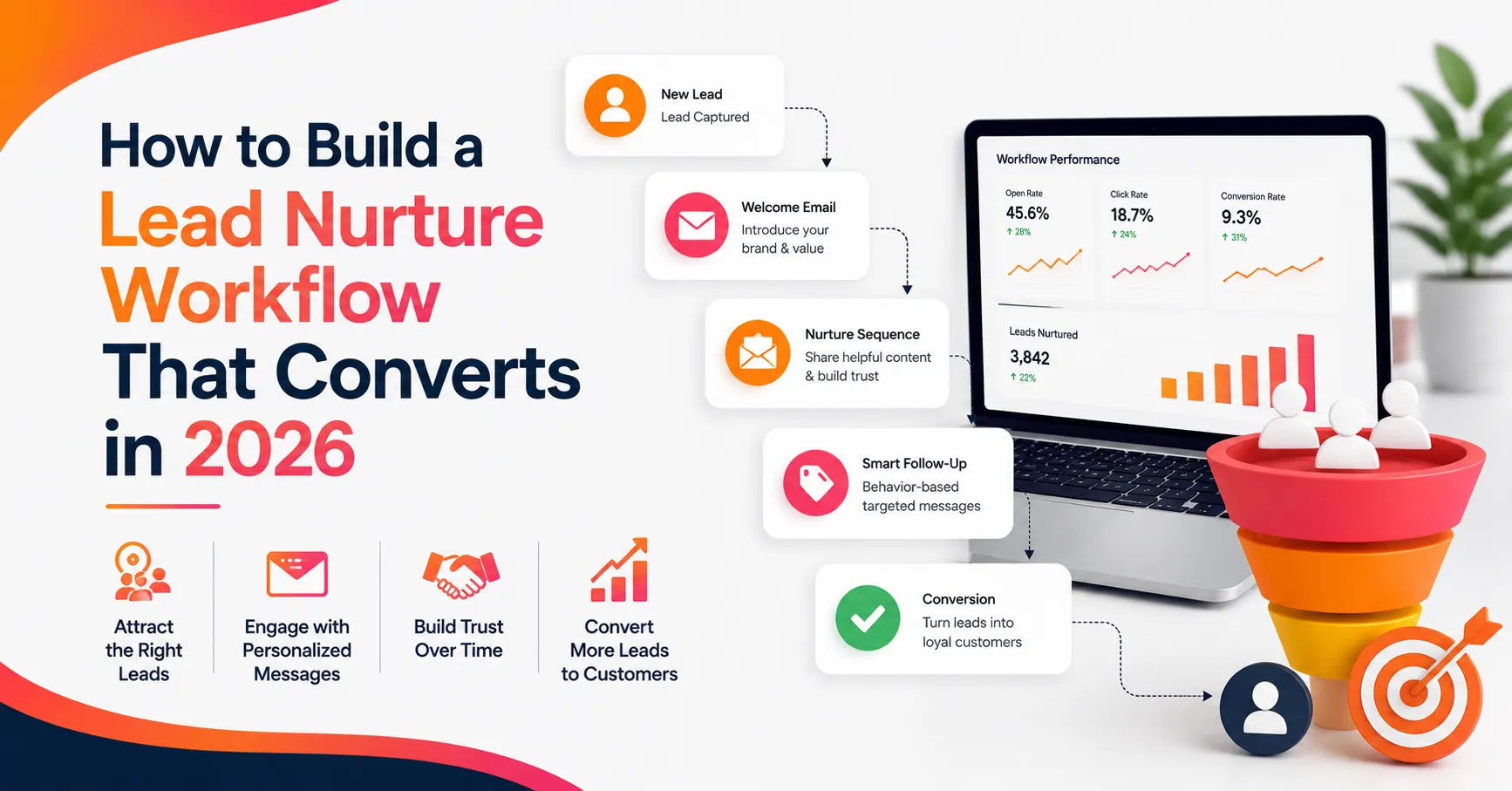
Creating automated sales workflows requires more than choosing an email tool and scheduling messages. The workflow needs a clear trigger, conversion goal, message path, timing logic, behavioral branches, and sales handoff.
1. Define the Trigger
Choose the exact action that starts the workflow. A vague trigger creates a mixed audience and weakens every message.
The trigger might be:
- Downloading a lead magnet
- Completing a contact form
- Registering for a webinar
- Requesting pricing
- Visiting a high-intent page
- Abandoning an inquiry
The clearer the trigger, the easier it becomes to understand what the prospect probably needs next.
2. Set One Conversion Goal
Decide what successful completion looks like.
Sales funnel automation works best when the end action matches the lead’s current intent. A beginner downloading an educational guide may be encouraged to view a service page. Someone requesting pricing may be directed toward a consultation.
Do not force every prospect toward the same action.
3. Plan the Messaging Sequence
Map the logic before drafting the copy.
Decide what each message must accomplish, what question it should answer, and which behaviors should change the next step.
For more on the tools and logic, read Varun Digital Media’s guide to marketing automation for B2B.
4. Set the Timing
Immediate delivery makes sense after a form submission. Educational follow-up may arrive one or two days later. A sales invitation should follow demonstrated interest rather than an arbitrary countdown.
Timing must reflect urgency and the buying cycle. Five emails in two days may overwhelm a B2B prospect, while a week-long delay after a consultation request is too slow.
5. Add Behavior-Based Branches
A linear sequence assumes every lead behaves the same way. A better workflow responds to signals.
A case-study click can trigger more proof. Pricing-page activity can alert sales. Repeated inactivity can pause the sequence instead of sending messages endlessly.
Behavioral branches turn basic drip marketing sequences into responsive customer journeys.
6. Build the Sales Handoff
Define when automation stops and a person takes over.
Handoff triggers may include a consultation request, repeated high-intent activity, a strong lead score, or a direct reply. Assign ownership, create a CRM task, preserve activity history, and set a response expectation.
The sales representative should know:
- Where the lead came from
- Which content the lead viewed
- What messages the lead engaged with
- Which service or problem attracted interest
- What action triggered the handoff
This context prevents the sales conversation from starting at zero.
Want the workflow mapped before investing in more tools? Request a digital marketing consultation to connect messaging, automation, and sales follow-up.
What Is a Simple Lead Nurture Workflow Example?
Consider a visitor who downloads a website lead-generation checklist.
Day 0: Deliver the checklist and set expectations.
Day 2: Explain one common conversion leak and share a relevant article.
Day 5: Provide a short audit framework that helps diagnose the problem.
Day 8: Present a case study, testimonial, or before-and-after example.
Day 11: Invite the lead to request a website or campaign audit.
A service or pricing-page visit can notify sales and trigger decision-stage information. When engagement disappears, the contact can move into a slower educational stream.
The initial offer shapes the nurture path. This guide to the best lead magnets for growing subscribers explains how to attract relevant prospects.
Which Channels Should a Nurture Workflow Use?
Email is often the foundation, but it should not operate alone.
A connected workflow may combine email, retargeting, CRM tasks, website content, permission-based SMS, and direct sales outreach.
Use email for education and detailed explanations. Use retargeting to maintain recall. Use SMS for appropriate, time-sensitive communication. Use personal outreach when buying intent becomes clear.
The goal is a consistent experience, not appearing everywhere.
Which Lead Nurturing Mistakes Reduce Conversions?
The biggest mistake is treating automation as a substitute for relevance.
Avoid:
- Sending identical drip marketing sequences to every lead
- Pitching before establishing context or trust
- Writing every message around the company
- Using several competing CTAs
- Continuing after conversion, opt-out, or disqualification
- Failing to connect marketing activity with sales
- Tracking opens while ignoring replies, meetings, qualified leads, and revenue
Another mistake is refusing to let the workflow end. Not every contact will convert, and endlessly sending follow-ups can weaken trust rather than build it.
Set clear exit rules for leads who convert, become inactive, unsubscribe, or no longer match the target customer profile.
Commercial email must follow applicable rules. The FTC’s CAN-SPAM compliance guidance covers accurate sender details, non-deceptive subject lines, postal addresses, and opt-outs.
How Should Lead Nurture Performance Be Measured?
Measure whether the workflow creates meaningful movement, not merely whether messages were delivered.
Track:
- CTA clicks
- Direct replies
- Return website visits
- Booked consultations
- Sales-accepted leads
- Conversion time
- Opt-outs
- Influenced revenue
Compare results by segment and source because webinar, organic, and paid leads behave differently.
An excellent open rate means little when no one replies, requests information, books a consultation, or becomes a qualified opportunity.
Marketing platforms can connect delivery, behavior, and reporting. Varun Digital Media’s guide to digital marketing platforms explains how automation and analytics support a wider marketing system.
Lead Nurture Workflow Checklist
Before activating the workflow, confirm that:
- The trigger identifies a clear source or behavior.
- Every segment has a similar need and intent level.
- The sequence has one measurable conversion goal.
- Each message adds new value.
- Timing matches the sales cycle.
- Behavior can change the next action.
- Sales receive context before contacting the lead.
- Converted, inactive, and unsubscribed contacts exit correctly.
- Tracking connects engagement with qualified leads.
- The workflow has a review date.
Run through the workflow as though you were the prospect. Check every email, button, form, CRM update, notification, delay, branch, and exit condition before sending real leads through it.
Final Thoughts
A lead does not need endless reminders. It needs a clear reason to keep moving.
The best lead nurture workflow combines useful content, thoughtful timing, behavioral signals, and a clean sales handoff. Start with one audience and one goal. Build the smallest sequence that can move that lead forward, then improve it using real engagement and sales data.
Automation then becomes a practical system for converting cold leads into sales-ready prospects.
Turn inconsistent follow-up into a measurable nurture system.
Contact Varun Digital Media to plan the workflow, content, automation, and reporting around your sales process.
Frequently Asked Questions
1. How Many Messages Should a Lead Nurture Workflow Include?
A simple workflow may contain four to six purposeful messages. The right number depends on the offer, sales cycle, audience, and lead behavior.
2. How Long Should a Lead Nurturing Sequence Run?
A short sequence may run for one to three weeks, while complex B2B nurturing can continue for months. Frequency should decrease when engagement falls.
3. What Is the Difference Between a Drip Campaign and a Lead Nurture Workflow?
A drip campaign generally follows a fixed schedule. A lead nurture workflow can change according to behavior, profile, lead score, or funnel stage.
4. Can Small Businesses Use Sales Funnel Automation?
Yes. A small business can begin with one form, a few useful segments, a short email sequence, and a defined sales handoff.
5. When Should Sales Contact a Nurtured Lead?
Sales should step in when the lead requests contact, demonstrates repeated high intent, meets qualification criteria, or reaches an agreed scoring threshold.
Published: July 13th, 2026
Tags:
- automated sales workflow
- B2B lead nurturing
- behavior-based marketing
- conversion funnel strategy
- CRM lead nurturing
- drip campaign vs lead nurturing
- email nurture sequence
- improve lead conversion
- lead follow up automation
- lead nurture workflow
- lead nurturing strategy
- lead segmentation strategy
- marketing automation workflow
- nurture campaign examples
- sales funnel automation