Reading Time: 5 minutes
Why Most Multilingual Websites Fail to Rank Globally
Many businesses invest heavily in website translation but still fail to generate international traffic.
The problem is simple:
Translation is not multilingual SEO.
Without proper international SEO strategy, multilingual websites struggle with:
• Duplicate content issues
• Wrong country targeting
• Poor keyword localization
• Low international search visibility
At Varun Digital Media, we help businesses turn multilingual websites into global lead-generation engines.
This guide explains how multilingual SEO works and how to implement it correctly.
Understanding the Importance of Multilingual SEO
Before diving into the best practices, it is important to understand why multilingual SEO is crucial for the success of your website. Here are a few key reasons:
1.1 Expanding Global Reach
By optimizing your website for multiple languages, you can tap into new markets and expand your global reach. This allows you to connect with potential customers who prefer accessing information in their native language.
1.2 Enhanced User Experience
Providing content in multiple languages improves the user experience and makes it easier for visitors to navigate and engage with your website’s SEO. This leads to increased user satisfaction, which ultimately boosts conversions and sales.
1.3 Increased Organic Traffic
Implementing effective multilingual SEO tips can significantly improve your website’s visibility in search engine results pages (SERPs) across different languages. This, in turn, drives organic traffic to your site, helping you achieve higher rankings and increased brand exposure.
Conducting Keyword Research for Multilingual Websites
Keyword research is the foundation of any successful SEO strategy, and it becomes even more critical when dealing with multilingual websites. Here’s how to conduct keyword research for your multilingual website:
2.1 Understand Local Search Behavior
Different regions and languages have diverse search behavior patterns. It’s essential to research and understand the specific keywords and phrases that local audiences use to find products or services similar to yours. This can be achieved through market research, competitor analysis, and localized keyword tools.
2.2 Translate vs. Localize Keywords
While translating keywords may seem like the obvious choice, it’s crucial to remember that translation does not always capture the true intent of a search query. Instead, focus on localizing your keywords by adapting them to the specific language and culture of your target market. This ensures relevancy and improves your chances of ranking higher in local SERPs.
2.3 Leverage Multilingual Keyword Tools
Utilize multilingual keyword research tools such as SEMrush, ahrefs, or Google Keyword Planner to identify relevant keywords and search terms in different languages. These tools provide insights into search volume, competition, and related keywords, enabling you to optimize your content successfully.
Implementing On-Page Optimization Techniques
Once you have identified the right keywords for your multilingual website, it’s time to optimize your on-page elements to improve search engine visibility. Here are some key on-page optimization techniques for multilingual SEO:
3.1 URL Structure and Hreflang Tags
Ensure that your website’s URL structure is optimized for multilingual SEO. Use language-specific subdirectories (e.g., example.com/en/ or example.com/es/) or subdomains (e.g., en.example.com or es.example.com) to differentiate between different language versions of your site.
Additionally, implement hreflang tags on each page to indicate to Search Engine Optimization which language version of a page should be displayed to users in specific locations. This helps search engines understand the language targeting of your content and avoids any confusion.
3.2 Unique Metadata for Each Language Version
Craft unique meta titles and descriptions for each language version of your web pages. This ensures that search engines display the most relevant information in SERPs, thereby increasing click-through rates and improving the user experience.
3.3 Optimize Content for Targeted Keywords
When optimizing content for different language versions, ensure that you incorporate targeted keywords naturally within the text. Avoid direct translation and focus on creating unique content that resonates with the local audience, taking cultural nuances into account.
3.4 Translate Alt Text for Images
Translate alt text for images on your multilingual website to make them more accessible to users who rely on screen readers or assistive technologies. Translated alt text also helps search engines rank and understand the context and relevance of images in different languages.
Multilingual SEO Quick Checklist
• Use localized keyword research (not translation)
• Implement hreflang tags correctly
• Create unique content for each language
• Build backlinks in local markets
• Track performance by country and language
The Cost of Poor Multilingual SEO
Companies often assume translation alone will generate global traffic.
But without proper multilingual SEO:
• International pages remain invisible in search
• Wrong audiences land on wrong language pages
• Bounce rates increase significantly
• Conversion rates drop across regions
Businesses investing in international expansion without SEO lose potential revenue every month.
Building High-Quality Multilingual Backlinks
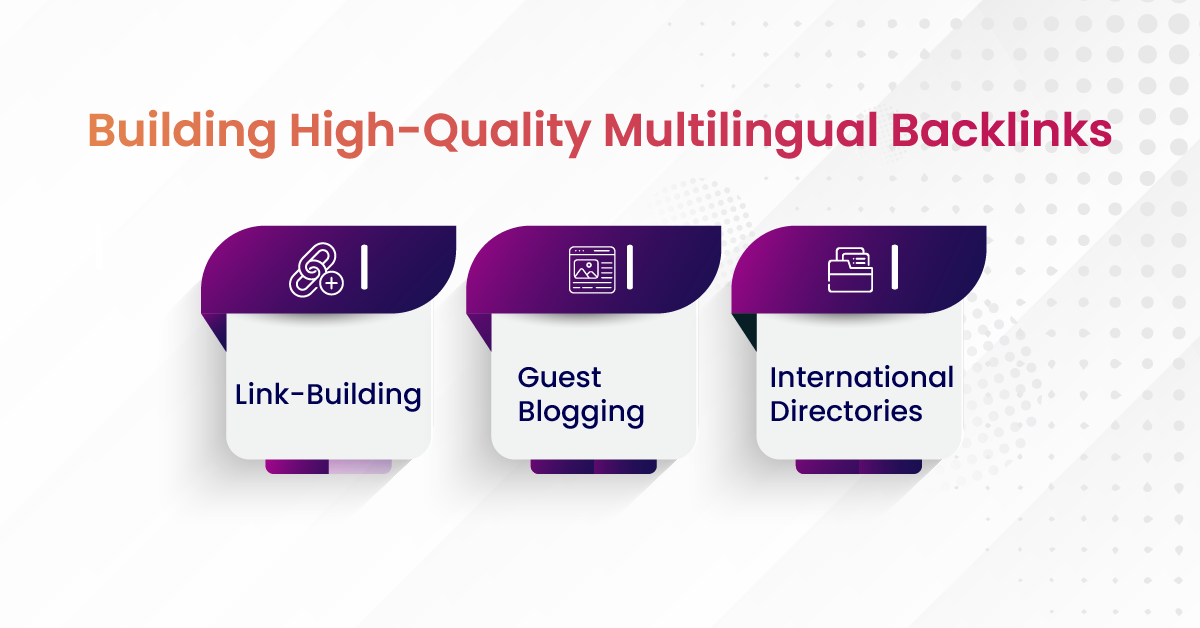
Building high-quality backlinks is a crucial aspect of any successful SEO strategy, regardless of whether it’s for a monolingual or multilingual website. Here are some tips for building authoritative backlinks for your multilingual website:
4.1 Localized Link-Building Campaigns
Develop localized link-building campaigns tailored to each target market/language version of your website. Partner with local influencers, industry publications, or directories in each market to generate backlinks from reputable sources within those regions.
4.2 Guest Blogging in Local Languages
Create valuable content in different languages and leverage guest blogging opportunities on popular websites within your target markets. This allows you to reach a wider audience while earning authoritative backlinks back to your multilingual website.
4.3 Leverage International Directories
Submit your multilingual website to relevant international directories that cater specifically to different regions and languages. This helps improve your website’s visibility in local search results and generates valuable backlinks from trusted sources.
Monitoring and Analyzing Multilingual Website Performance
To ensure the ongoing success of your multilingual SEO efforts, it is essential to monitor and analyze the performance of your website across different languages. Here’s how you can do it effectively:
5.1 Use Analytics Tools
Leverage web analytics tools such as Google Analytics or Yandex Metrics to track key performance metrics for each language version of your website. Monitor traffic sources, user behavior, conversion rates, and engagement metrics across different languages to identify areas of improvement.
5.2 Conduct A/B Testing
Perform A/B testing on different elements of your multilingual website, including landing pages, call-to-action buttons, layouts, or even language-specific content variations. This allows you to optimize the user experience based on data-driven insights and improve conversion rates.
5.3 Monitor Local Search Trends
Stay updated with local search trends and adapt your SEO strategies accordingly. Regularly analyze keyword performance, search volumes, and user behavior within each target market/language version. Adjust your content and optimization techniques based on emerging trends to maintain competitiveness.
Why Businesses Choose Varun Digital Media for Multilingual SEO
Our multilingual SEO strategies include:
• International keyword localization
• Hreflang implementation and technical SEO
• Country and language targeting strategy
• Multilingual content planning
• Global link-building campaigns
• Conversion-focused international landing pages
We help businesses expand globally while maintaining strong search visibility in every target market.
Ready to Grow Your International Traffic?
If your business plans to expand globally, multilingual SEO is not optional—it is essential.
Conclusion
Multilingual website success requires more than translation. It demands a strategic approach to international SEO, localized keyword research, technical optimization, and culturally aligned content creation.
Businesses that treat multilingual SEO as a growth strategy—rather than a translation task—position themselves for stronger global visibility, better user engagement, and higher international conversions.
With the right multilingual SEO framework in place, companies can expand confidently into new markets, improve search performance across regions, and build a sustainable global online presence.
Published: January 19th, 2024