
Reading Time: 6 minutes
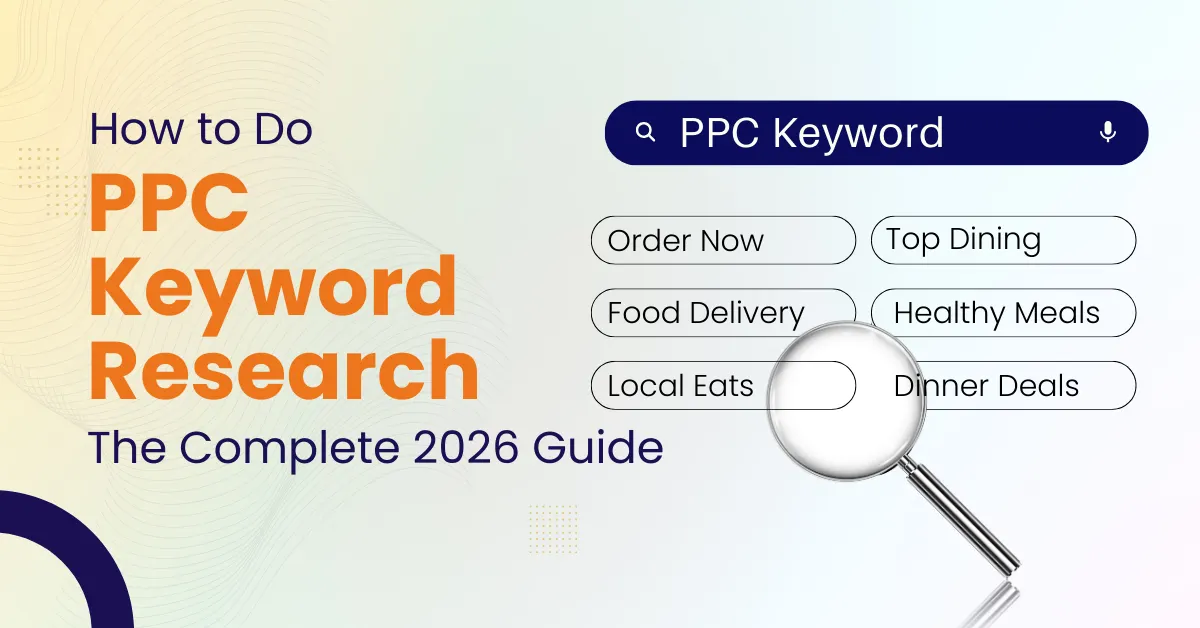
Running PPC campaigns without proper keyword research is akin to running ads without a clear understanding of the target audience. You might spend money, but you won’t reach the right audience, attract quality clicks, or achieve strong conversions.
At Varun Digital, our PPC strategies always start with solid keyword research. We study search behavior, search terms, search volume, match types, negative keywords, landing page intent, competitor keywords, and PPC research tools to build strategies that deliver real results.
This guide explains how to do PPC keyword research using a clear, beginner-friendly approach. Each step is broken down so you understand what matters, why it matters, and how to apply it to your PPC campaigns in 2026.
Table of Contents
What Is PPC Keyword Research?
PPC keyword research is the process of finding the terms your audience searches before clicking on paid ads. It helps you discover relevant, high-intent, and long-tail keywords, as well as negative keywords that prevent wasted clicks.
When keyword research is done correctly, your ads become more relevant, your conversions increase, and your budget works more efficiently. Most importantly, it ensures your ads appear in front of people actively searching for what you offer.
Why PPC Keyword Research Matters
Keyword research is the foundation of every successful PPC campaign. When your keywords align with user search behavior, you improve Quality Score, lower CPC, and boost conversions.
In 2026, higher competition, rising CPCs, and AI-supported search behavior make accurate keyword research more important than ever.
Keyword research matters because it helps you:
- Reach users searching for your exact service or product
- Reduce wasted spend on irrelevant clicks
- Improve Quality Score through high-intent targeting
- Lower CPC with stronger relevance
- Increase conversions with action-driven search queries
- Write better ad copy that reflects real search behavior
- Improve landing page performance with aligned content
- Build campaigns that convert consistently
How to Do PPC Keyword Research (Step-by-Step Framework)
This is the same keyword research framework we use at Varun Digital to build high-performing PPC campaigns.
Step 1: Start With Seed Keywords
Seed keywords are basic starting terms that describe your business, product, or service. These words help PPC tools generate related keyword ideas.
Examples of seed keywords:
- accounting software
- PPC keyword research tools
- fitness coaching apps
- CRM solutions
- marketing automation
- online training courses
Seed keyword rules:
- Choose terms that your audience typically searches for
- Include service-specific words that clearly describe your offering
- Add industry terms customers use to explore your niche
- Use simple descriptive phrases that explain your product’s purpose
Seed keywords help PPC tools generate accurate keyword ideas.
Step 2: Use PPC Keyword Research Tools
These tools help you discover new keywords, analyze search volume, check competition, and identify valuable long-tail keywords.
Best tools:
- Google Ads Keyword Planner
- Keyword Planner inside Google Ads
- SEMrush Keyword Magic Tool
- Ahrefs Keyword Explorer
- WordStream Free Keyword Tool
- Ubersuggest
- AnswerThePublic
- SpyFu
Most tools now offer AI-generated keyword ideas and predictive trend insights in 2026, helping marketers build accurate keyword lists faster.
Tool usage guidelines:
- Check monthly search volume to understand demand
- Review estimated CPC to forecast budget needs
- Check keyword competition to estimate difficulty
- Explore related suggestions to expand your list
- Study trend data to understand seasonal behavior
These insights help build strong keyword lists backed by reliable data.
Step 3: Understand Search Intent Before Selecting Keywords
Search intent shows what the user expects to find. It helps you decide if a keyword is worth targeting.
Types of search intent:
1. Informational Intent
- Used by people searching for general information
- Works well for awareness campaigns
2. Commercial Intent
- Used by users comparing products or exploring alternatives
- Ideal for warm, mid-funnel traffic
- In 2026, these keywords are even more valuable because AI-driven search encourages comparison-based behavior
3. Transactional Intent
- Used by users who are ready to buy or take action
- Best for high-intent conversion campaigns
4. Navigational Intent
- Used to find a specific brand or website
- Not always useful for PPC unless bidding on your own brand
For PPC, focus mainly on commercial and transactional keywords.

Step 4: Build a Complete PPC Keyword List
A strong keyword list includes a mix of different keyword types.
Keyword types to include:
- long-tail keywords
- competitor keywords
- exact match keywords
- phrase match keywords
- broad match keywords
- high-intent keywords
- local keywords
- branded keywords
- negative keywords
Tips for building your keyword list:
- Choose primary keywords that match your core intent
- Add long-tail keywords to target specific needs
- Include related terms to expand reach
- Use local keywords for geographic targeting
- Add competitor keywords to capture comparison searches
- Focus on high-intent keywords for conversions
This approach helps you build a profitable keyword list.
Step 5: Analyze Search Volume and CPC
Search volume shows how often people search for a keyword. CPC shows how much it costs to compete.
Analysis guidelines:
- Choose keywords with stable volume and strong intent
- Avoid extremely high-CPC keywords unless ROI supports them
- Balance volume and intent for profitability
- Monitor CPC trends to adjust budgeting
Balanced keywords help you avoid wasted spend.
Step 6: Organize Keywords Into Tight Ad Groups
Well-organized ad groups improve relevance, Quality Score, and conversion performance.
Best ad group structures:
Buy-Intent Ad Group
- Targets keywords from users ready to buy
- Ideal for conversion campaigns
Feature-Intent Ad Group
- Targets keywords that focus on specific product features
- Helps write feature-focused ad copy
Long-Tail Ad Group
- Targets detailed, specific searches
- Usually has lower CPC and higher conversion potential
Good structure makes your campaigns easier to optimize and scale.
Step 7: Choose the Right Keyword Match Types
Google Ads offers three match types:
Exact Match
- Shows ads only for very close keyword matches
Phrase Match
- Shows ads when the search includes the meaning of your keyword
Broad Match
- Reaches wide audiences but requires careful monitoring
Start with exact and phrase match. Use broad match only after collecting enough data.
Step 8: Add Negative Keywords to Avoid Wasted Spend
Negative keywords help block your ads from showing for irrelevant searches.
Guidelines:
- Block unrelated search terms
- Prevent wasted budget from low-intent clicks
- Improve targeting accuracy
- Increase conversions by filtering out uninterested users
Common examples:
- free
- job
- meaning
- tutorial
- definition
Negative keywords protect your budget and improve targeting.

Step 9: Use the Search Terms Report Weekly
The Search Terms Report shows the actual queries people used before clicking your ads.
Usage guidelines:
- Find new converting keywords
- Identify irrelevant searches draining the budget
- Add new negative keywords quickly
- Remove keywords that waste spend
This report can dramatically improve campaign performance.
Step 10: Refresh Your Keyword Strategy Monthly
Keyword research isn’t a one-time task.
Monthly update rules:
- Remove keywords that don’t convert
- Add new trending keywords
- Adjust match types based on performance
- Expand your negative keyword list
Because search patterns shift faster in 2026 due to AI-driven behavior, monthly keyword reviews are essential for consistent results.
Conclusion
PPC keyword research is the starting point for every successful PPC campaign. Choosing the right keywords helps your ads reach people who are genuinely interested in your product. This improves conversions, reduces wasted spend, and increases overall performance.
At Varun Digital, we focus on clear, data-driven keyword research. We study real search behavior, select high-intent keywords, remove wasted traffic, and structure campaigns for better conversions.
When your keyword strategy is strong and consistent, your PPC ads perform better, cost less, and support steady business growth in 2026.
Want Expert PPC Keyword Research Done for You?
Improve your PPC performance with accurate keyword research, strong strategy planning, and expert optimization from Varun Digital’s PPC specialists.
FAQs
1. How do I begin PPC keyword research?
Start by listing simple seed keywords related to your service. Use tools like Google Keyword Planner to find more ideas. Check search volume, understand search intent, and group keywords. Then add negative keywords and review search terms every week for improvements.
2. What makes a keyword good for PPC campaigns?
A good PPC keyword is relevant, shows clear intent, and brings users who want your product. It should have enough search volume and match your landing page well. These keywords usually lead to better conversions and stronger campaign performance overall.
3. Why are negative keywords important in PPC?
Negative keywords block your ads from appearing for irrelevant searches. This prevents wasted spending and helps your ads reach the right audience. Updating negative keywords often improves targeting, reduces low-quality clicks, and increases your overall PPC return on investment.
4. Which tools are best for PPC keyword research?
Google Keyword Planner is the most trusted tool for PPC research. SEMrush, Ahrefs, WordStream, and Ubersuggest also help find related keywords, search volume, and competitor insights. These tools make it easier to build a strong list for your campaigns.
5. How does search intent impact keyword selection?
Search intent shows what the user wants. Keywords with transactional or commercial intent work best for PPC because they come from buyers ready to take action. Matching keywords with the right intent improves relevance, click-through rates, and conversion performance.
6. How does Varun Digital help with PPC keyword research?
Varun Digital analyzes seed keywords, competitor keywords, and search intent to build strong PPC keyword lists. We refine negative keywords, review search terms, and improve match types. Our process helps reduce wasted spend and increase conversions across all your campaigns.
Published: December 8th, 2025